


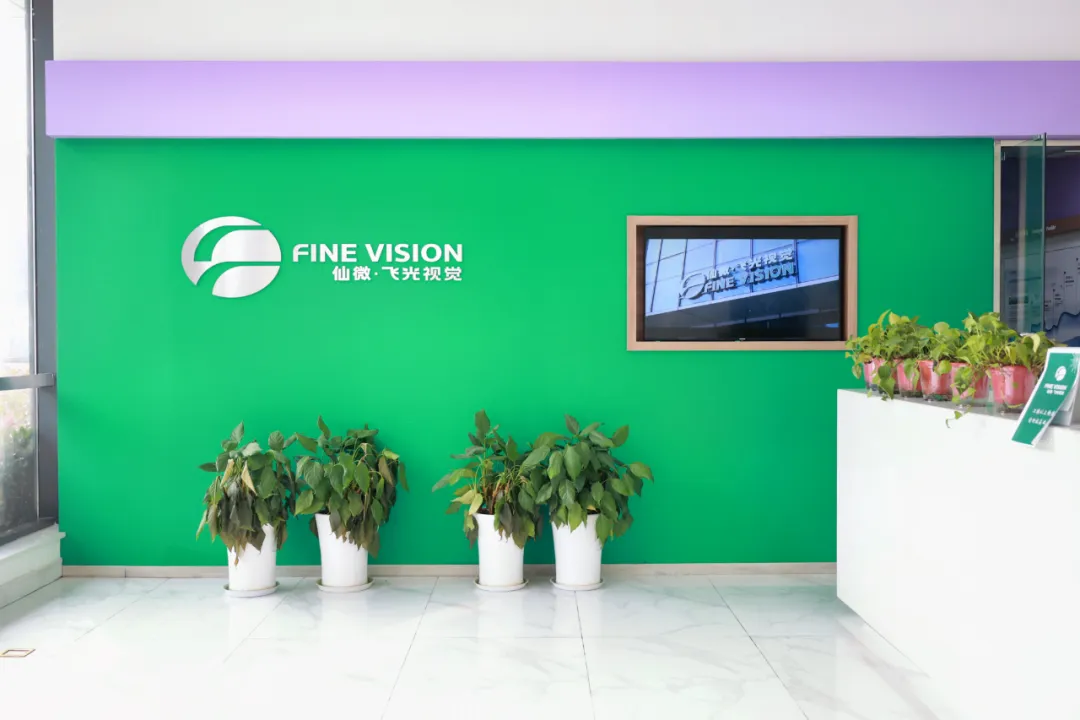
In mid-April, at the 25th International Conference of Ophthalmology, Xianwei Vision Technology (Nanjing) Co., Ltd. (hereinafter referred to as "Xianwei Vision") launched China's first and the world's second femtosecond laser corneal refractive surgery technology capable of simultaneous "ultra-fast scanning, corneal vertex positioning, and automatic eyeball rotation compensation." This also marked the debut of China's independently developed femtosecond laser refractive technology on the international stage, instantly becoming the most prominent "Chinese name card" at the conference and attracting numerous domestic and international experts and scholars to stop, experience, and exchange ideas.
Femtosecond laser refractive surgery equipment, known for its exceptional precision, safety, efficacy, and stability, is often regarded as the "pinnacle of the pyramid" in the medical device field—a technological high ground long dominated by international giants. As China's first forward-designed industry disruptor with complete independent intellectual property rights, Xianwei Vision has, in recent years, achieved continuous breakthroughs in core technologies. It carries the market's expectations for domestic substitution and exemplifies the innovative strength of "Chinese smart manufacturing" ascending to the higher end of the global value chain.
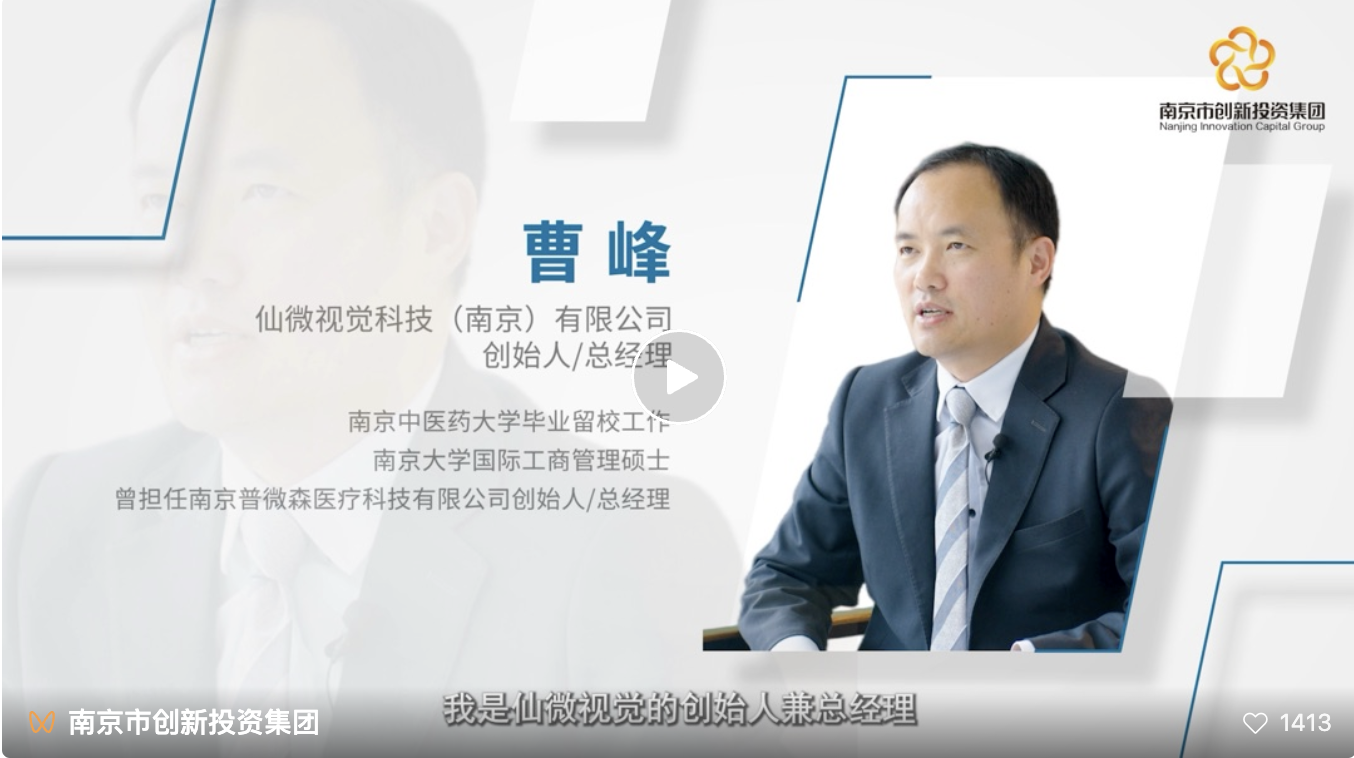
Honed over a decade, "leapfrog advancement" will be the key development theme for Xianwei Vision in 2025. "We will use high-quality clinical data to announce to the world that China has not only conquered this technological peak but will also achieve leapfrog development in the commercialization process," said Cao Feng, founder of Xianwei Vision, with unwavering confidence.
Decipherer of the "Starry Sky"
In 2021, Cao Feng once again found himself at a crossroads in his entrepreneurial journey. He had just successfully exited his first company—a medical technology enterprise that achieved revenue exceeding 100 million yuan within just four years of its establishment.
After conducting an in-depth scan of the entire medical device industry chain, Cao Feng ultimately set his sights on the ophthalmology sector. "I visited an eye hospital and found that the operating rooms were uniformly equipped with imported devices. This indicated a dual opportunity in the ophthalmology field: an urgent demand for import substitution and vast space for technological innovation."
With the sector determined, the practical challenges of entrepreneurship immediately emerged: How to break through core technological barriers, and how to assemble the project team? It was at this moment that the research team led by Professor Zeng Shaoqun from the Biomedical Photonics Research Department at Huazhong University of Science and Technology’s Wuhan National Laboratory for Optoelectronics came to his attention.
Zeng Shaoqun is one of the pioneers in femtosecond laser biomedical research in China. Since 1996, he has dedicated himself to this field, pioneering the application of femtosecond laser technology in brain network imaging research. In 2014, the year after the world’s first all-femtosecond surgical device was launched, Zeng decisively shifted his research focus to all-femtosecond laser ophthalmic surgical equipment.
What impressed Cao Feng the most was that Zeng’s team persistently adhered to the path of "from 0 to 1" forward research and development, rather than taking the shortcut of "reverse engineering" imported equipment. This approach allowed them to gradually establish a fully independent all-femtosecond laser ophthalmic technology system. At the same time, this top-tier research team was also facing the "valley of death" in translating scientific research achievements into practical applications.
Technological innovation requires not only scientists who gaze at the starry sky but also "ferrymen" who can decipher the language of the stars. To this end, Cao Feng made a special trip from Nanjing to Wuhan. In his view, he was not the first to approach the team but likely the most "knowledgeable" one. "Most investors didn’t believe that a domestic Chinese team could overcome this technological challenge. But I understand both technology R&D management and industrialization pathways, which allowed me to see possibilities others couldn’t."
After in-depth exchanges and research, Cao Feng concluded that the all-femtosecond laser ophthalmic market had the potential for "long-term and substantial" growth. It was in a strategic window period to break import monopolies and fill domestic gaps, with a clear commercialization path. Particularly, Zeng’s team had already completed a scientific principle-based prototype and built core technological barriers. "This is the optimal time to intervene: too early, and the technology is immature; too late, and the market may already be seized. It’s like the final pass on a soccer field—someone needs to take the decisive shot," he admitted.
The gears of fate began to turn. In March 2022, Xianwei Vision was established in Nanjing. That same year, the company’s "Femtosecond Laser Corneal Refractive Surgery Device R&D Project" was selected for the 2022 National Key R&D Program. Rather than simply being a domestic substitute, the company aimed to become a global leader in ophthalmic medical technology. Thus, a hardcore technology battle was launched.
Sculptors of Vision
In all-femtosecond laser myopia correction surgery, doctors operate femtosecond laser equipment to precisely sculpt a coin-sized convex lens within the patient's thin cornea within mere seconds. With micron-level three-dimensional positioning accuracy, the convex lens is seamlessly separated and removed, achieving the goal of correcting vision and enhancing visual quality.
"This is equivalent to using a laser to 'micro-sculpt' a convex lens within a healthy cornea, with errors must be controlled within 5 micrometers—finer than one-fifth the diameter of a human hair. More critically, we are operating on perfectly healthy tissue, where no errors are permitted," Cao Feng explained.
Due to the high technical barriers and stringent surgical requirements, products under Germany's Zeiss have long been the world's only devices capable of performing all-femtosecond surgeries, monopolizing the global market for over a decade. These devices hold over 70% market share in China, with each unit costing over 10 million yuan. Additionally, each procedure incurs thousands of yuan in technology licensing fees, keeping surgery costs prohibitively high.
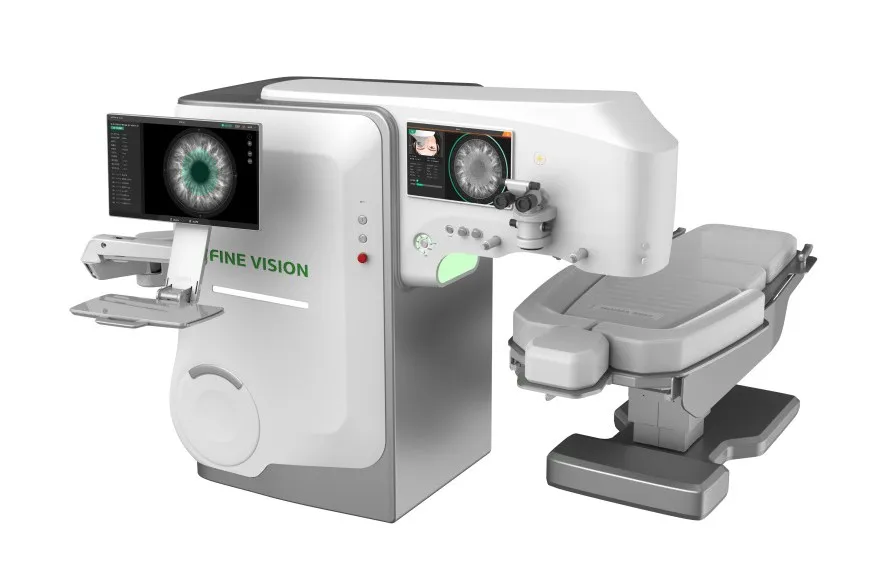
However, Xianwei Vision's development speed has captured the industry's attention. In May 2024, the innovative company, then just two years old, reached a milestone—the first fully independently developed femtosecond laser corneal refractive surgery device, the Finevision2000, rolled off the production line at its Nanjing manufacturing base.
"No precedents to follow, no shortcuts to take, no retreat to choose—this is not a miracle but the result of relentless perseverance," Cao Feng reflected.
Femtosecond laser corneal refractive surgery technology is akin to a "lithography machine for the cornea," involving optics, photonics, electronics, ophthalmic optometry, artificial intelligence algorithms, and precision manufacturing and assembly. Each subsystem presents complex professional demands and entirely new research challenges. To overcome these technical barriers, the team had to embark on a "cross-disciplinary learning" model: tackling technical problems during the day, studying professional literature at night, and seeking guidance from experts across various fields.
As the world's largest refractive surgery market, China boasts experts whose clinical surgical skills and scientific research are at the global forefront. Xianwei Vision innovatively translated the clinical wisdom of China's top ophthalmologists into technological advantages, forming a unique "Chinese solution." Unlike the daily rhythm of 10 surgeries per day in European and American countries, Chinese hospitals handle over a hundred procedures daily, operating continuously for 24 hours during peak periods. To meet this demand, the R&D team focused on overcoming the stability challenges of continuous device operation. Through innovative optical stability system design, the Finevision2000 can support an ultra-high intensity of 200 surgeries per day.
This philosophy of "integrating medicine and engineering" permeated the entire R&D process. Xianwei Vision regularly invited ophthalmologists to participate in product testing, optimizing operational workflows based on their feedback. The device offers exceptional operational freedom, aligning with clinicians' needs without requiring significant effort to learn or adapt, achieving a "ready-to-use" clinical-friendly characteristic.
It is reported that the first batch of Finevision2000 products has already been trialed by several renowned domestic experts. Clinical feedback indicates that the product's precision and operability are already on par with imported counterparts.
Long-Distance Partners
Innovation lays the foundation, capital provides the impetus, and the market tempers the outcome. In the arena of high-end medical equipment, major technological breakthroughs are no longer solitary endeavors but rather the result of synergistic collaboration among industry, academia, research, and capital.
In January 2025, Xianwei Vision announced the completion of an over 100 million yuan Series A funding round, led by Lilly Asia Ventures, with participation from Kaiwind Ventures. Existing shareholders, including Nanjing Innovation Investment Group (hereinafter referred to as "Nanjing Innovation Investment Group") and Dingsing Capital, continued to add investment. The funds will be allocated to the registration clinical trials and market promotion of the Finevision2000.
Amid a cooling trend in pharmaceutical industry financing, Xianwei Vision broke through against the odds relying on its technological strength and promising market prospects, becoming a focal point for capital competition. It is reported that in 2024 alone, over 50 venture capital institutions engaged with the company, which currently holds multiple advancing term sheets.
"For investors, we always insist on 'selecting the best among the best.' We hope investors have an in-depth understanding of market trends, a thorough grasp of the team and technology, adhere to long-term value, and can empower the company to address its weaknesses, rather than merely providing financial injection," Cao Feng stated frankly.
Nanjing Innovation Investment Group’s renewed investment in the latest funding round drew significant attention. Regarding this strategic shareholder, who has been firmly involved since the 2023 angel round, Cao Feng expressed deep gratitude: "Nanjing Innovation Investment Group focuses on major scientific and technological achievements transformation and the incubation of high-precision industries. They are a 'long-distance' partner willing to delve into hard technology and accompany entrepreneurs on their growth journey."
He particularly emphasized that the industry resources, management experience, and strategic vision brought by high-quality capital often help technical teams avoid detours. Whether it was the efficiency of completing due diligence and transferring funds within a month or the post-investment service philosophy of 'not interfering when unnecessary but being readily available when needed,' Nanjing Innovation Investment Group provided solid support for Xianwei Vision’s R&D efforts.
In response, a relevant official from Nanjing Innovation Investment Group’s Investment Department III also shared insights: "Since its establishment in 2022, Xianwei Vision has completed the engineering prototype, finalized the device design, and passed device type testing within just three years. This pace of technological breakthrough far exceeded our expectations. The project has also successfully attracted social capital to invest in Nanjing, reinforcing our belief that 'investing early and small' is a strategy the venture capital group should long adhere to."
Despite Xianwei Vision’s rising market valuation, Cao Feng has always maintained his entrepreneurial initial intent and strategic clarity: "Valuation numbers have never been our pursuit. When clinicians actively recommend our products, and when more patients choose our products—that is the greatest value of Xianwei Vision."
It is reported that in 2025, Xianwei Vision will allocate core resources to advance multi-center clinical trials, aiming to demonstrate through high-quality scientific data that China’s independently developed femtosecond laser refractive surgery equipment has reached the global technological forefront.
Notably, medical device agents from Russia, Brazil, Indonesia, and other countries are soon arriving in Nanjing to discuss collaboration talks with Xianwei Vision regarding local market access. After globally comparing similar technologies, these industry institutions are casting votes of confidence in "Chinese smart manufacturing" with their professional judgment.
This light originating from China not only enables patients to regain clear "vision" through domestic devices but also represents the dawn breaking through foreign technological monopolies. For explorers, there are no boundaries; for light chasers, there are no limits.
Source: Innovation Investment Group
Reviewed by: Xue Yao
Published by: You Yi


