


In 2025, the low-altitude economy was included in the Chinese government work report for the second consecutive year. Thirty provinces (autonomous regions and municipalities), including Beijing, Shanghai, Jiangsu, and Zhejiang, have accelerated their layout in the low-altitude economy sector, igniting a race for a "trillion-yuan market." As of November 2024, China has nearly 19,000 drone operating enterprises and 2.158 million registered domestic drones. As aircraft increasingly densely shuttle across urban skies, challenges such as complex urban airspace coordination and inadequate safety management have emerged.
How can "chaotic flying" be transformed into "orderly flying"? Range Technology (Nanjing) Co., Ltd. has broken through with a "one-stop" low-altitude IoT solution, building a digital foundation for this aerial revolution.
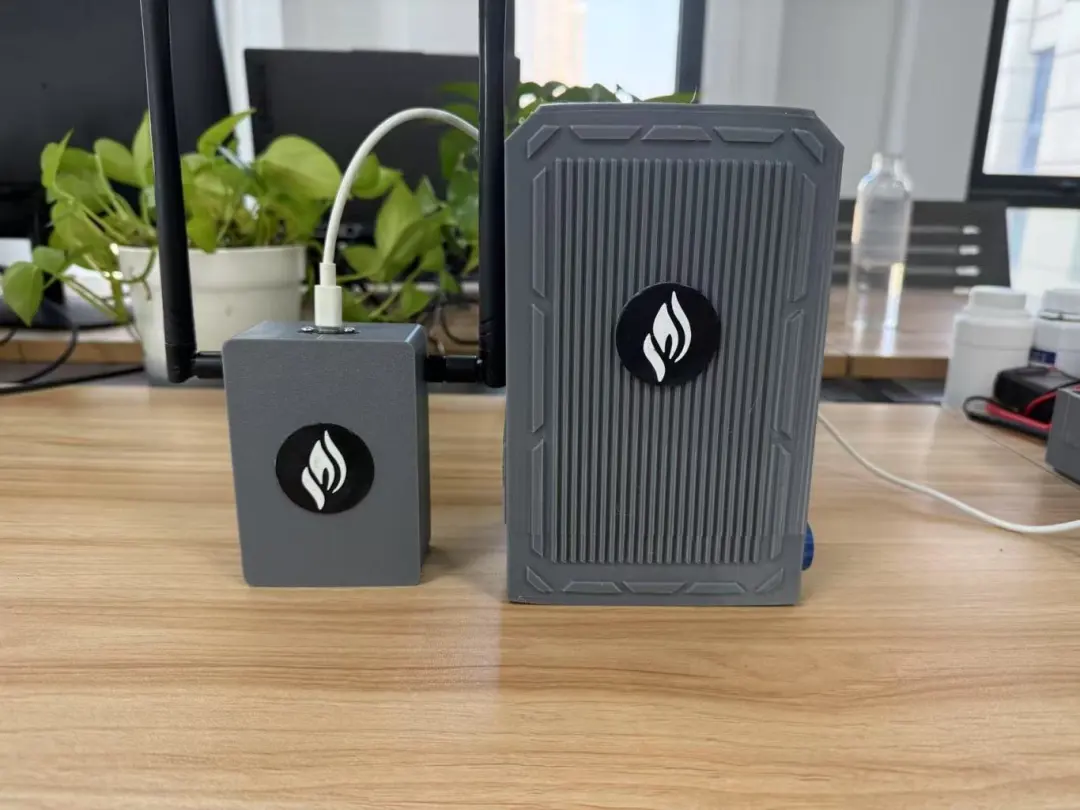
Founded just two years ago, Range Technology has keenly identified the industry pain point in the low-altitude economy: transitioning from "able to fly" to "able to fly well." Leveraging its self-developed "Spatio-Temporal Smart Flight" technological solution, the company uses digital twin technology to create an "aerial map," enabling comprehensive visual monitoring of dynamic data within low-altitude airspace and ensuring its safe operation.
Seizing the Opportunity in Low-Altitude Economy Development: Creating a Digital-Intelligent Airspace Flight Map
Zhao Ke, founder and general manager of Range Technology, has extensive experience in low-altitude safety and geographic information-related fields, having previously served as a technical lead at key enterprises. His team has participated in the development of several major research projects, accumulating deep technical expertise in low-altitude safety and spatial computing.
In June 2023, the State Council issued the "Interim Regulations on the Flight Management of Unmanned Aircraft," marking a new phase of standardized development for the low-altitude economy. This made Zhao keenly aware of the national emphasis on the drone-related industry and foresaw the demand for low-altitude economy infrastructure. In September 2023, leveraging years of technical accumulation and practical experience in low-altitude-related fields, Zhao established Range Technology in Nanjing. By the end of that year, the company had completed the preliminary construction of a low-altitude IoT platform and achieved product commercialization.
With the Central Economic Work Conference at the end of 3designating the low-altitude economy as a strategic emerging industry and the term "low-altitude economy" being included in the government work report for the first time in early 2024, Range Technology capitalized on the dual drivers of policy support and airspace reform. The company expanded its access to low-altitude big data, accelerated the iteration of intelligent algorithm engines and spatial computing models, and continuously refined its low-altitude IoT platform.
In Zhao's view, low-altitude travel, like road travel, requires a well-developed transportation network system. The Spatio-Temporal Smart Flight platform developed by Range Technology is an electronic map specifically designed for aircraft, leveraging technologies such as low-altitude IoT, artificial intelligence, and spatial computing. It ensures orderly flight by planning optimal routes and providing real-time guidance. However, before using this electronic map for route planning, the platform must first possess the capability to monitor the status, position, and trajectory of aircraft in low-altitude airspace in real time. Therefore, while building a "cloud-based foundation" for low-altitude airspace management, Range Technology also focused on developing low-altitude perception equipment, creating a integrated hardware-software technical solution—Spatio-Temporal Smart Flight.
In early 2024, Zhao led his team to participate in the "Win in Nanjing" Youth College Student Entrepreneurship Competition, where they won the Excellence Award for "Spatio-Temporal Smart Flight." This achievement secured financial support from the Nanjing Human Resources and Social Security Bureau and the Nanjing Innovation Investment Group.
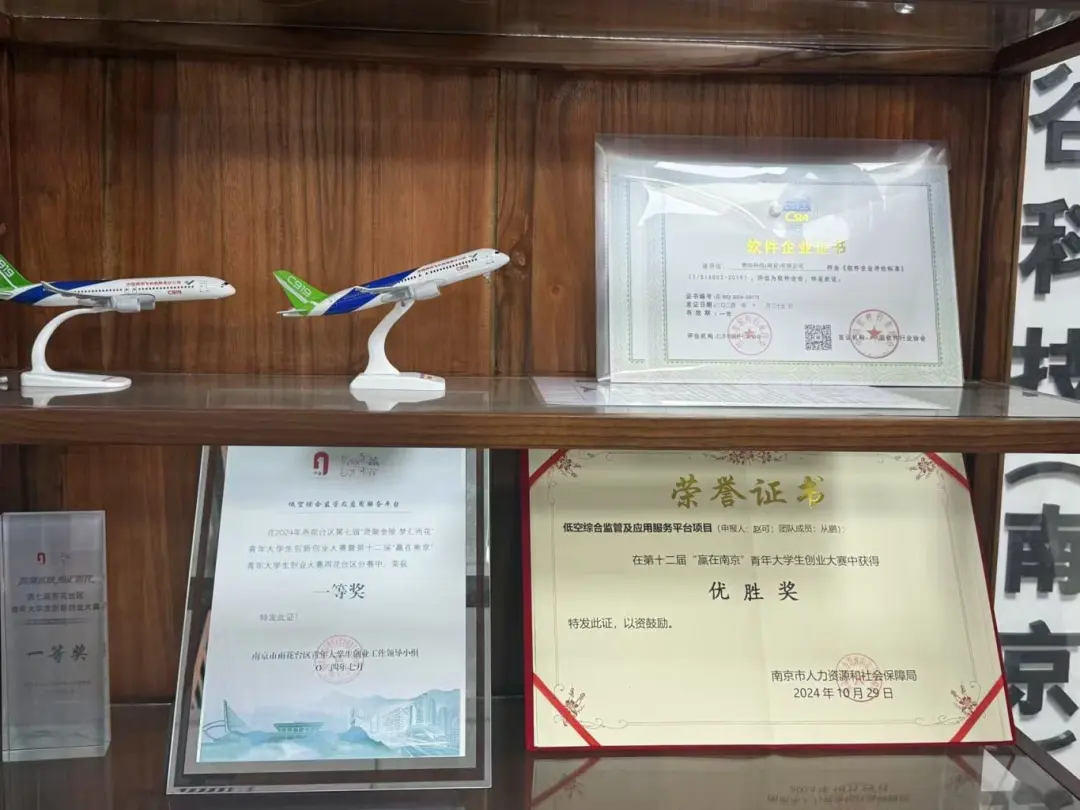
"With this funding, we successfully developed low-altitude perception terminal equipment, enabling the integration of hardware and software for our Spatio-Temporal Smart Flight product. The establishment of the hardware segment will also facilitate subsequent iterations and upgrades of the software," Zhao Ke stated. In addition to financial support, the venture capital group provided resource coordination services with government agencies, research institutions, universities, and upstream and downstream enterprises in the industry chain, accelerating Range Technology's market expansion and partnership network development.
Now, entering its third year, Range Technology has signed strategic cooperation agreements with multiple enterprises in the low-altitude application and safety sectors. The company has participated in low-altitude planning and construction projects across several regions, becoming a national-level technology-based SME and a member of the Civil Aviation UAV Industry Technology Innovation Strategic Alliance. It has emerged as a rising force in Nanjing's low-altitude economy industry.
Empowering the Industrial Chain with Core Technological Advantages to Foster Low-Altitude Economy Ecosystem Development
In December last year, the National Development and Reform Commission established the Department for Low-Altitude Economy Development, signaling China's heightened focus on this sector. Policy incentives have driven rapid growth in the low-altitude economy. According to data from the Civil Aviation Administration of China, the market size of China's low-altitude economy is expected to reach 1.5 trillion yuan by 2025, potentially climbing to 3.5 trillion yuan by 2035.
The vast growth prospects have attracted an increasing number of enterprises to the low-altitude economy industry. Data from Qichacha shows that the number of newly registered low-altitude economy-related enterprises in China exceeded 10,000 in 2024, surpassing the total registrations for 2023.
The growing number of participants indicates intensifying industry competition on one hand, and on the other, an accelerated construction and refinement of the industrial ecosystem. In Zhao Ke's view, Range Technology's goal is not to dominate the industry but to collaborate with more innovative enterprises, combining their accumulated technology and experience with others' expertise to develop tailored low-altitude airspace management solutions for various application scenarios and fields, thereby promoting the gradual maturation of the low-altitude industrial ecosystem.
"Many companies have already developed integrated solutions, but they haven't conducted in-depth and detailed research in areas such as spatial computing and algorithm operation," Zhao explained. When constructing urban low-altitude transportation networks, challenges often arise, such as difficulties in aligning data of different resolutions and inconsistencies in data accuracy.
Leveraging past experience in the geographic information field, Range Technology reconstructed its spatial computing model based on the concept of a "three-dimensional pyramid structure" with varying resolutions. After low-altitude data sampling, the "3D pyramid structure data slicing technology" processes the airspace into a three-dimensional grid, then performs upsampling and downsampling according to different resolutions to build the pyramid structure. In practical applications, airspace of different resolutions is utilized based on precision requirements.
Additionally, in response to the trend of increasingly complex and bloated intelligent algorithm engines in the industry, Range Technology focuses on the functionality and practicality of algorithms in specific applications. They develop rich intelligent services and functions centered on practical needs such as image processing, target recognition, path planning, spectrum analysis, and decision optimization, ensuring algorithms efficiently serve applications.
Based on these two core technologies, Range Technology has partnered with several leading industry enterprises, including Speed Technology, Jiangsu Aoland, and Jiangsu Future Network, to strengthen and complement the regional low-altitude economy industrial chain. Among them is Yunshang Jindou, another startup invested in by the venture capital group.
Yunshang Jindou is a high-tech company specializing in drone countermeasure and safety supervision systems, with multiple proprietary patents for drone countermeasure devices. Range Technology empowers them through the low-altitude management and application system of Spatio-Temporal Smart Flight, helping them refine their drone management and control system in the low-altitude defense sector.
"It is encouraging to see Range Technology and Yunshang Jindou driving industry innovation through complementary strengths. This also reflects the venture capital group's practice of channeling capital into niche sectors of the low-altitude economy and injecting it into innovative SMEs, effectively promoting the construction of Nanjing's low-altitude economy industrial ecosystem," said a relevant official from the Future Industry Investment Department of Nanjing Innovation Investment Group. The group will continue to focus on key industrial directions such as low-altitude manufacturing, low-altitude support, low-altitude flight, and comprehensive services, helping Nanjing establish itself as a new hub for the low-altitude economy.
Enhancing Technological Accessibility Through Targeted Approaches to Accelerate Breakthroughs in Low-Altitude Economy Applications
The low-altitude economy is currently at a critical stage of rapid development, driven by coordinated efforts in policy, technology, and application scenarios, propelling it toward scale and commercialization. However, numerous challenges have also emerged.
During this year's National Two Sessions, several members of the Chinese People's Political Consultative Conference offered suggestions on key areas such as trial flights, low-altitude equipment, power systems, talent cultivation, and regional development. They also proposed integrating the low-altitude economy with application scenarios like cultural tourism and transportation to further embed it into public daily life.
From Zhao Ke's perspective, beyond widely discussed issues such as technological innovation, industrial chain collaboration, application scenario expansion, and the establishment of legal and regulatory frameworks, the low-altitude economy faces other pain points of concern both within and outside the industry. These include limited grassroots participation, an urban-rural imbalance with rural areas often overlooked, and insufficient data accumulation.
Zhao believes that the complexity of urban environments hinders the rapid large-scale application of low-altitude technologies. He suggests adopting a "rural areas encircling cities" strategy, first accumulating substantial foundational data in towns and villages with fewer air transport management restrictions. Application scenarios can then be gradually introduced to cities, ultimately achieving smart city operations.
Simultaneously, industry players often prioritize large commercial projects while neglecting exploration and innovation in niche sectors. "We aim to start with smaller orders and more specific scenarios, allowing low-altitude technologies to penetrate various industries and seep into the city's capillaries," Zhao explained. Range Technology has already applied core technologies such as the "3D pyramid structure data slicing technology" and intelligent algorithm engines across industries, empowering scenarios like precision detection and security patrols.
"Range Technology's original intention is to lower the barrier to applying low-altitude technologies, enabling broader adoption while attracting more enterprises, institutions, and talent to the industry to foster its prosperity," Zhao stated. This year, the company plans to strengthen collaboration with members of the Civil Aviation UAV Industry Technology Innovation Strategic Alliance, integrating the strengths and technologies of various enterprises to jointly create new benchmark application scenarios for the low-altitude economy.
"As the low-altitude economy deeply integrates with smart city development, more new application scenarios will emerge, bringing fresh opportunities for innovative enterprises like Range Technology," said a relevant official from the Future Industry Investment Department of the venture capital group. In recent years, the group has invested strategically along the core segments of the low-altitude economy industrial chain, with Range Technology serving as a key node in the low-altitude IoT platform sector. Moving forward, the group will continue to empower Range Technology's growth through increased investment and resource integration.
Source: Venture Capital Group
Reviewed by: Xue Yao
Published by: You Yi


