


Foreword
Over the past year, artificial intelligence has undoubtedly been one of the most definite themes in global technology and capital markets. From the leap in large model capabilities and the reconstruction of computing infrastructure, to the emergence of agents and the accelerated entry of robots into the real world, AI is evolving from a “technological wave” into a profound industrial revolution.
At the same time, uncertainties have been accumulating: Will there be a fundamental shift in the technological paradigm? When will commercialization pathways be fully validated? How to distinguish between bubbles and long-term value? In such an era of “high ceiling, high uncertainty”, how professional investors can form truly penetrating judgments has become a widely concerned issue in the market.
Focusing on the above topics, Nanjing Innovation Investment Group specially invited Mr. Tang Hesong, Founding Partner of Xianghe Capital, to conduct an in-depth dialogue on the underlying logic of AI investment, industrial ecosystem layout, key variables and the synergy mechanism of patient capital, exploring the investment methodology and long-term opportunities in the era of artificial intelligence.
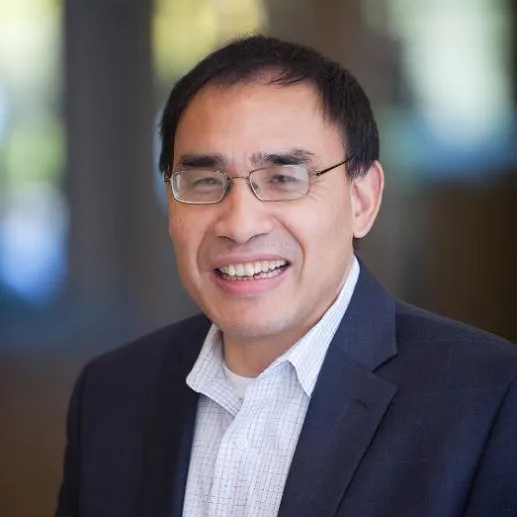
Tang Hesong
Founding Partner, Xianghe Capital
Founded in 2016, Xianghe Capital is one of the earliest investment institutions in China to systematically deploy artificial intelligence and cutting-edge technologies. It focuses on frontier technological fields including AI, robotics, new energy and new materials, and has invested in and supported a number of outstanding tech innovation enterprises, such as ByteDance, iQiyi, Lalamove, Full Truck Alliance, Zuoyebang, Moonshot AI (Kimi), Tashi Intelligence, Xinghai Tu, Xingdong Jiyuan, Luoshi Robot, Huasen Pharma, etc.
Most members of Xianghe’s core team have top-tier science and engineering backgrounds and long-term deep industrial experience. Mr. Tang Hesong was formerly Head of Strategic Investment and M&A at Baidu, with rich experience in tech industry judgment and investment. Xianghe Capital has made forward-looking layouts in AI models, embodied intelligence, intelligent hardware and other fields, forming a clear and stable investment “operating system”.
Xianghe Capital: A “Precision Hitter” Deeply Engaged in Cutting-Edge Technologies
VC Group
Xianghe Capital is recognized as an expert in China’s AI investment field. Could you brief us on Xianghe Capital?
Tang Hesong
Xianghe Capital was founded in 2016, nearly a decade ago. In terms of investment focus, we have always concentrated on cutting-edge technologies, mainly artificial intelligence, robotics, new energy and new materials, with a clear early-stage orientation.
Our team has a distinctive background. I often joke that it can be summarized in six words: Tsinghua, Peking University, Baidu. Our five core members all come from Baidu. I was in charge of strategic investment and M&A at Baidu, and the core team were my former colleagues. Meanwhile, most of the investment team have science and engineering backgrounds from Tsinghua University or Peking University, with a deep understanding of technology itself.
I have always believed that investment requires both intelligence and steadiness. Steadiness is a kind of determination, while intelligence is the ability to break down complex issues and see through to the essence. Investment is essentially making judgments about the future in a highly uncertain environment. Only by truly understanding the underlying logic can we make relatively correct decisions in the long run.
Core Logic of AI Investment: Get a Seat at the Table, Target Leaders, Bet on Teams
VC Group
The industry widely recognizes that Xianghe Capital’s strategic judgments in AI investment feature strong “penetration”. Facing projects with high technical barriers and unproven commercial pathways, how exactly is this penetration reflected?
Tang Hesong
I often say that the most important “penetration” in investment is essentially the grasp of the essence of things and the cognition of strategic vision. In the AI field, this penetration is mainly reflected in three core judgments:
First, judge whether to “get a seat at the table”. We must first clarify whether the current AI wave is an epoch-making trend that will most likely change the world. Although there are still debates – for example, some argue that the Transformer architecture may have limitations on the path to AGI – the mainstream consensus is that this is a technological transformation comparable to the Industrial Revolution. As professional investors, once we recognize this high-probability event, we must get a seat at the table; missing this wave means missing an entire era.
Second, after taking a seat, we must “play the right cards”. The core is to have an overall penetrating understanding of the AI industry map: first target the leaders, then the mid-tier players, and finally the peripherals. Structurally, the AI ecosystem can be divided into upstream computing infrastructure (chips, cloud services, power supplies, toolchains), midstream foundation models and intelligent capabilities, and downstream application layers – including AI agents in the virtual world and general-purpose robots with generalization capabilities entering the physical world.
Third, the core of targeting leaders is to “bet on the best teams”. In the AI era, we are looking for companies equivalent to BAT in the internet era: Who will be China’s NVIDIA (chips)? Who will be the leader in foundation models? Who will set the benchmark for super agents and general-purpose robots? These high-potential enterprises in leading sectors have unlimited ceilings, and the core of success lies in the team. Technologies can iterate and models can be optimized, but outstanding teams possess the ability for continuous breakthroughs – this is the most critical consideration in our investment decisions.
Two Major Variables in AI Investment: Technological Paradigm Iteration and AI for Science
VC Group
In your opinion, what is the biggest variable in current AI investment? How do you view the industry debates over “AI bubble” and “lagging commercialization”?
Tang Hesong
I believe there are two major variables: one with negative uncertainty, the other with positive opportunities.
The first variable is the change in technological paradigm. Will the current “greater compute = better results” model based on the Transformer architecture be disrupted by a new paradigm? Ilya Sutskever, former Chief Scientist of OpenAI, also mentioned “something missing”, indicating that the current technical route may still have shortcomings. If the new paradigm is disruptive, many current investments may face risks; if it is only an iteration, existing investments can continue to upgrade. This uncertainty over technological paradigm is both the biggest challenge and the greatest opportunity in AI investment.
The second variable is “AI for Science”. I am deeply curious about this field. Simply put, can AI fundamentally revolutionize scientific discovery – playing a central role in the study of dark matter and dark energy, as well as the exploration of new materials, new physical laws, and new mathematical formulas? If AI achieves breakthroughs in this field, it will completely change the world and bring a wealth of revolutionary investment opportunities.
As for the controversies over “bubble” and “lagging commercialization”, I regard them as inevitable stages in the development of new technologies. It is normal for technology to outpace applications and valuations to outpace commercialization. The key is to choose the right tracks and teams. The core issue today is not whether AI has value, but how to realize that value. This process takes time and requires patience from capital.
Investment Opportunities in the GPU Track: Domestic Substitution Space Under Diversified Technical Routes
VC Group
The GPU track is currently highly watched, with giants such as Huawei, Cambricon, Baidu Kunlun Chip in the lead, and startups like Moore Threads and Muxi going public. How do you view the future of the GPU track?
Tang Hesong
As the core of AI computing power, the GPU undoubtedly offers a track with huge investment potential. We have been following it and have already made relevant investments. Objectively speaking, the domestic GPU industry currently has two characteristics: first, commercialization still takes time – although a few enterprises’ products have passed training model verification, there are not many cases of large-scale commercial procurement by application giants; second, diversified technical routes – in addition to traditional architectures, many startups have taken differentiated paths. For example, one of our portfolio companies adopts the RISC-V instruction set, and many others pursue 3D stacking.
This diversification of technical routes is precisely the opportunity for domestic GPUs. AI computing power demands are diverse, with different scenario requirements for chips, and there is no absolute unified technical standard. Whether training or inference chips, as long as they solve core pain points in specific scenarios, they have room for survival and development. We will continue to focus on leading enterprises with different technical routes, especially startups that can break through core technical bottlenecks in the wave of domestic substitution.
Core Value of Patient Capital: Tolerate Failure, Empower via Policy, Link Resources
VC Group
Tech enterprises require long-term capital and time support from R&D to commercialization. Beyond capital, what other support does Xianghe Capital believe patient capital should provide?
Tang Hesong
The core of patient capital is, first and foremost, risk tolerance. The earlier the tech investment, the longer the cycle, the greater the uncertainty, and the higher the probability of failure. Patient capital, whether state-owned or private, needs to enhance tolerance for failure. Higher failure rates at early stages are an objective law. If we truly want capital to invest in long-term innovation, we need to leave more room for error in institutional design, rather than judging early-stage projects by mature-stage standards.
In terms of institutional design, it is advisable to appropriately “loosen up” entrepreneurs. For example, repurchase clauses and Pre-IPO timelines can be flexibly adjusted according to the growth laws of tech enterprises, which is more conducive to the long-term development of the entire industry.
In addition, venture capital groups with state-owned backgrounds can form a strategic synergy of “policy + orders”, achieving a 1+1>2 effect. On the policy side, they can provide portfolio companies with a supportive policy environment including talent introduction, tax incentives and supporting facilities – critical for early-stage tech enterprises. On the order side, state-owned fund of funds are closely connected with the government, enabling portfolio companies to access customer resources in public sectors such as healthcare, education and energy, and even provide necessary endorsement to help enterprises quickly expand the market. Such resource empowerment is more valuable than pure financial support.
Nanjing’s Startup Ecosystem: Early Opportunities Emerging, Ecosystem Synergy Promising
VC Group
Beyond industrial giants, are there cooperation opportunities for startups in Nanjing? How does Xianghe Capital view Nanjing’s tech startup ecosystem?
Tang Hesong
Nanjing abounds with entrepreneurial opportunities, especially great potential in early-stage tech projects. Institutions such as Nanjing Venture Capital are very active: on the one hand, they support sub-funds like ours; on the other hand, they actively engage in direct investment, deepening their understanding of the ecosystem through investment and forming strong industrial leverage. Regardless of whether enterprises are registered in Nanjing, these ecological levers can bind their growth with Nanjing’s development.
The relocation of manufacturing industries from Shanghai and the gathering of outstanding tech enterprises from northern China to East China have brought opportunities for industrial supporting upgrades to Nanjing. Nanjing boasts a solid industrial foundation, abundant talent resources, plus capital and policy support from state-owned venture capital institutions, making it highly suitable for tech enterprises to settle and grow. We also hope to deepen cooperation with local institutions such as Nanjing Venture Capital in the future, introduce more high-quality tech projects to Nanjing, and jointly foster globally influential tech enterprises.
Conclusion
Under the AI wave, the essence of investment lies in judging the trend of the times, penetrating the essence of the industry, and adhering to long-term value. Mr. Tang Hesong’s shared AI investment logic of “get a seat at the table, target leaders, bet on teams”, as well as his deep understanding of patient capital – “risk tolerance, policy empowerment, order linkage”, reveal the core code of hard tech investment.
As an institution with a state-owned background and long-term strategic attributes, Nanjing Innovation Investment Group is building a comprehensive tech investment ecosystem through fund-of-funds linkage and direct investment layout. In the future, with the support of professional GPs such as Xianghe Capital, Nanjing will attract more high-quality tech enterprises to settle, form a synergistic effect of “capital + technology + industry”, and occupy an important position in the global competition of the AI era. Let us move forward hand in hand, and jointly celebrate and create the future in this world-changing technological revolution.
Source: Fund Department, Gong Yuxiang
Reviewed by: Xue Yao
Released by: You Yi


