VC Insights | Exclusive Interview with Yu Jun, Partner of SenseTime Guoxiang Capital: Focusing on AI Investment
Foreword
As the wave of the intelligent revolution sweeps across the globe, artificial intelligence is moving from technological exploration to the core of industrial integration. From the computing power arms race triggered by large models to the large-scale implementation of scenarios such as autonomous driving and smart healthcare, AI technology is not only reshaping the boundaries of industrial efficiency but also creating trillion-level new market opportunities. At the same time, the rational return of the capital market has shifted investment logic from "concept first" to "value deep cultivation", and enterprises with hard technology strength and commercial closed-loop capabilities continue to gain favor. Against this backdrop, Nanjing Innovation Investment Group specially invited Mr. Yu Jun, Partner of SenseTime Guoxiang Capital, to conduct an in-depth dialogue on "Industrial Perspective and Ecological Logic of AI Investment". Based on the unique positioning of industrial capital, this interview will discuss topics such as industrial chain opportunities in the field of artificial intelligence, AI going global, and core characteristics of next-generation AI enterprises.
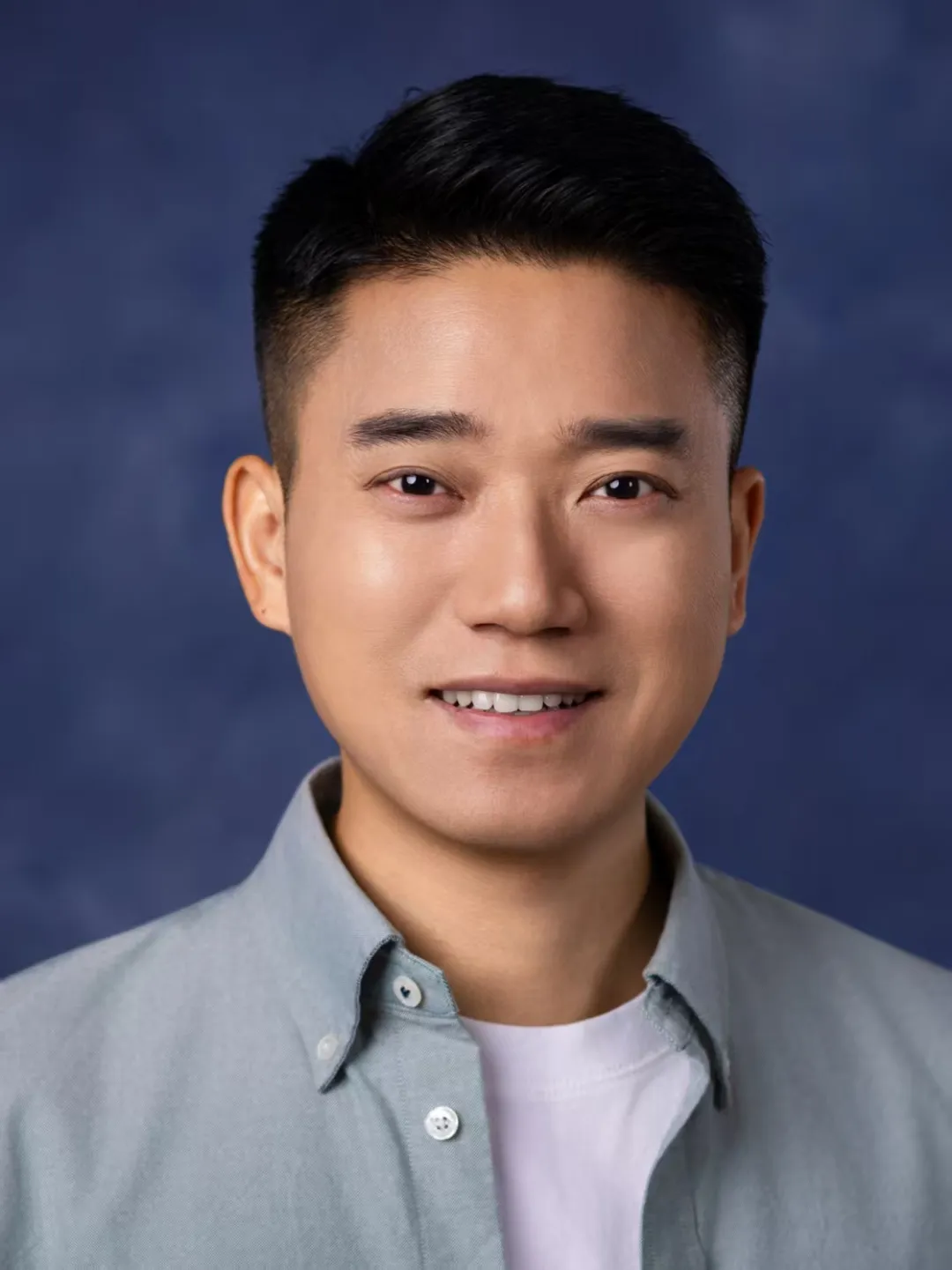
Mr. Yu Jun is currently a Partner at SenseTime Guoxiang Capital. He has a composite background spanning investment and entrepreneurship, with profound dual understanding of the industrial ecology and investment practices in the technology field. Mr. Yu has worked at many well-known investment institutions such as JD Capital, IDG Capital, and GGV Capital, accumulating rich experience in his years of professional investment career. He has personally founded a business and served as CEO of Herbal Convenience Intelligence. Based on his firm optimism about artificial intelligence reshaping the industrial landscape, he joined SenseTime Guoxiang Capital in 2021, focusing on investment layout in the field of intelligent technology. With his keen insights in the AI field and outstanding investment performance, he has won many authoritative honors in the industry, and his investment cases cover multiple cutting-edge directions such as autonomous driving, AI semiconductors, and intelligent terminals.
Nanjing Innovation Investment Group:
Which AI sub-sectors does the fund focus on? Could you share your core investment logic?
Yu Jun:
The investment direction of Guoxiang Capital is consistent with the development trajectory of AI technology, which can be mainly divided into two stages: During the AI 1.0 era, we focused on underlying core technologies and their initial application scenarios, with key layouts in autonomous driving, AI chips, and the application of original technologies represented by computer vision (CV) in specific scenarios; entering the AI 2.0 era, the investment focus has been further upgraded, with more resources invested in building a more complete industrial ecology and upstream and downstream applications. Currently, we focus on key areas such as robotics, semiconductors, intelligent hardware, autonomous driving, and AI for Science, actively seizing systematic opportunities brought by the deep integration of technology into industries.
Nanjing Innovation Investment Group:
Does SenseTime prefer to invest in "hard technology" teams with disruptive core technologies, or does it value more their ability to combine technology with SenseTime's ecosystem and specific industrial scenarios?
Yu Jun:
In our investment system, we do not set a single preference for "hard technology" or "commercialization capabilities". We believe that the identity of industrial capital is not contradictory to the ultimate goal of financial returns, and the ultimate essence of a fund is to make profits. Therefore, the core of our decision-making is the pragmatic "First Principles", that is, judging the core driving factors of its success based on the nature of the business engaged in by the enterprise. Specifically, our investment portfolio presents two paths: For fields relying on cutting-edge breakthroughs, we invest in teams that build barriers through high technical thresholds, such as Molecule Heart, Qingwei Intelligence, and Galaxy General in the AI for Science direction; for fields relying on product-market fit, we value their ability to integrate mature technologies and supply chains to create products and business models that meet global market demands. In a word, our style is to seek a dynamic balance between technological foresight and commercial feasibility, with the ultimate goal of finding excellent enterprises that are most suitable for the nature of their business and can continuously create value.
Nanjing Innovation Investment Group:
Compared with financial investment institutions in the market or CVCs of other technology giants, what are the core differentiation and advantages of SenseTime Guoxiang Fund?
Yu Jun:
Compared with traditional financial investment institutions or CVCs of technology giants in the market, the core differentiated advantage of Guoxiang Capital lies in: we adhere to a pure financial return orientation, rather than investing for industrial synergy or strategic defense, and at the same time, we deeply focus on early-stage hard technology tracks and dare to invest in cutting-edge projects like BrainCo in the first or second round. Behind this combines the top industrial insight and technical judgment we have as a platform under SenseTime, as well as our profound understanding of early-stage investment and the courage to take risks, forming a unique positioning that integrates "pure goal of financial investment + in-depth insight of industrial CVC + early-stage hard technology experts".
Nanjing Innovation Investment Group:
In your opinion, is the identity of "industrial capital" an "accelerator" or a "constraint" in investment decision-making?
Yu Jun:
I believe that the identity of industrial capital is by no means a constraint, but a significant accelerator. Its core value lies in transforming the abstract slogan of "empowerment" into specific and standardized capability output. For us, this accelerator effect is reflected in three levels: First, in tracks such as intelligent hardware, we transform past successful investment and operation experience into reusable modules to provide practical support for portfolio companies; second, for AI startups led by founders with technical backgrounds, we can share the experiences and lessons of SenseTime's development from 0 to 1 and even to 10, helping them foresee and avoid typical growth traps; finally, at the technical level, relying on SenseTime's profound accumulation in the AI field, we can provide in-depth evaluation and resource connection for portfolio companies in key decisions such as model selection, computing power solutions, and product experience. Therefore, the industrial background combined with our team's own senior investment experience together constitutes the unique acceleration we provide for early-stage companies, which is different from pure financial investors.
Nanjing Innovation Investment Group:
Why does Guoxiang Capital dare to and is good at investing in early-stage projects?
Yu Jun:
Our confidence stems from our grasp of industry laws and the profound practice of the team itself. First, we continuously track the evolution of technological paradigms, and can top-down judge the innovation themes that occur every few years, thereby seizing early track opportunities. Second, from the perspective of the fund's business model, when the secondary market exit path is not smooth, investing in late-stage projects may lead to "being stuck in a long-term holding position", which forces us to be forward-looking and turn to the early stage of innovation sources. Finally, and most importantly, our team has the genes and cognition of deeply cultivating early-stage investment. We have successfully invested in startups with only one or two people or a dozen people in institutions such as IDG and GGV for many times. This long-term "early-stage" practice makes us dare to and be good at identifying future leaders amid uncertainty.
Nanjing Innovation Investment Group:
When investing in particularly early-stage projects, how to avoid pitfalls and identify their risks and potential?
Yu Jun:
Our core method is "investing in people" and judging "structural opportunities". There is no standard answer for early-stage investment, but first of all, we will comprehensively evaluate the founder and his team to see if their resumes, abilities are highly compatible with what they are doing, which forms a feeling of "reliability". The deeper logic is that we will judge whether this is a "structural opportunity" and conduct a comprehensive analysis from dimensions such as external strategy, internal organization, and resource needs. If we determine that this field must be entered and find the most suitable founder, then even if the risk seems great to the outside world, it is something that is bound to succeed in our view. This is the underlying logic of our daring to "place bets".
Nanjing Innovation Investment Group:
In your opinion, which AI technology directions (such as embodied intelligence, AI4S, multimodality, edge AI, etc.) have the greatest commercialization and explosive potential in the next 1-3 years? Why?
Yu Jun:
I believe there are several clear golden tracks in the future: (1) The combination of multimodal large models and hardware: This is the biggest structural opportunity. AI has evolved hardware from "network-connected" to "conversational", which will spawn a large number of innovative hardware for vertical scenarios; (2) Robotics: Currently still in the "eve" of commercial implementation, more robots replacing simple and repetitive labor will appear in the future; (3) Edge chips and AI for Science: Some companies have emerged in edge chips, while AI for Science uses the improvement of computing power and models to create new substances and reduce costs in scientific research and industrialization fields; (4) In addition, we also focus on and personally participate in explorations facing "the vast sea of stars", such as spaceships, deep submersibles, and cross-medium aircraft. These fields require strong curiosity and the courage to seriously think about their feasibility when most people laugh. Real early-stage investment is to lay out these future fields 10 to 20 years earlier than industrial maturity.
Nanjing Innovation Investment Group:
In your opinion, what is the biggest common risk faced by current AI startups? How does the fund help them avoid these risks in post-investment management?
Yu Jun:
Our understanding and response to risks may be different from traditional perspectives: (1) Finding bright spots rather than risk points. Early-stage projects are inevitably full of various risks. If we only focus on risk points, we cannot make investments. Our core is to discover their "bright spots" in solving key problems and irreplaceable "long boards"; (2) The possible fatal common risks we really care about are not technology or market, but the founder and team: Do they have sufficient resilience? Is the speed of cognitive iteration fast enough? Can they unite excellent people and continue to raise funds? As long as these core human factors have no fatal problems, other shortcomings can be made up. Then as investors, first of all, we need to do a good job in psychological construction: admit that no enterprise is perfect, and any enterprise will inevitably experience "peaks and troughs" of development. Our role is to provide continuous support based on our belief in the track and team when they fall into the "trough", accompanying them through difficulties. These experiences can often make excellent teams stronger.
Nanjing Innovation Investment Group:
Currently in the AI field, especially after large models, there has been a "hundred-model war" and an upsurge of entrepreneurship at the application layer. How do you view the possible bubbles in it? In your opinion, what characteristics should a truly healthy and sustainable AI startup have?
Yu Jun:
My view is relatively optimistic. Bubbles are an inevitable process: any popular track will have bubbles, which is a necessary process for the market to eliminate the inferior and select the superior. The core is to invest in the right leaders. Our strategy is "Let others engage in cut-throat competition; we remain calm and focused". The key is to identify and invest in the leading companies in each sub-sector. I always believe that in a track, there are only two investment opportunities: the first is to invest in the number one leader, and the second is to invest in the number two leader. To find these leading companies, we adhere to a set of methods: first, find structural grand opportunities; second, identify the top three teams in this opportunity; finally, invest. This requires us to do in-depth industry mapping and cognitive accumulation. Even leading companies will inevitably experience "troughs" in development, and sub-leading companies have a higher probability. We are mentally prepared and will provide response suggestions when they encounter difficulties (such as business model adjustments, cash flow tensions, etc.) to help them "survive until the day after tomorrow".
Nanjing Innovation Investment Group:
"AI going global" is a major hot spot at present. How do you view the competitiveness of China's AI technology and applications in the global market? When investing, does SenseTime Guoxiang Fund give priority to teams with global potential? What layouts have been made to help portfolio companies go global?
Yu Jun:
Going global is a golden track. For startups, the key to breakthrough lies in three points: (1) Choosing the right category: avoiding fierce competition in simple products and choosing to make more complex products to gain a longer competitive time window; (2) Product supremacy: ensuring that product strength can "stand firm", which is the basis for subsequent growth; (3) Making up for marketing shortcomings: this is the core challenge for most founders with technical or product backgrounds. It is necessary to establish a professional marketing organizational system, think about what kind of marketing talents are needed, and deeply solve localization problems, including whether product definition, sales channels, and promotional selling points conform to the culture of the target market. We must establish the awareness that "even good wine needs promotion", and systematically build overseas marketing capabilities. The core help we provide goes far beyond capital, mainly reflected in in-depth participation and value co-creation. First, marketing organization construction: we directly apply the experience accumulated from close observation of successful overseas companies in the past to help enterprises build a marketing organizational structure that supports the commercial closed-loop, which is the most needed practical support for many technical founders; second, competitive strategy sorting: we help companies respond to potential cross-border competition, think about how to go beyond simple product competition, build long-term barriers centered on brand and channels, and adjust their business models and financing logic accordingly. Finally, we deeply participate in the company's strategic decision-making and think about long-term issues together with the founders. This hands-on "co-creation" model can not only help enterprises grow, but also the key for us to enter excellent projects at a low price in the early stage, because we provide the strategic companionship and structured thinking that founders very much need to alleviate their sense of loneliness.
Source: Chen Ling, Fund Department
Reviewer: Xue Yao
Publisher: You Yi


