


Standing at the Nanjing Pukou High-Tech Zone Comprehensive Low-Altitude Flight Base, several drones cut through the clear blue sky, conducting intensive test flights. Inside the nearby office building, the R&D team of Nanjing Sunny Aerospace Technology Co., Ltd. (“Nanjing Sunny”) is fully focused on the screens. The dancing codes and shuttling drones form a fascinating resonance between the virtual and the physical.
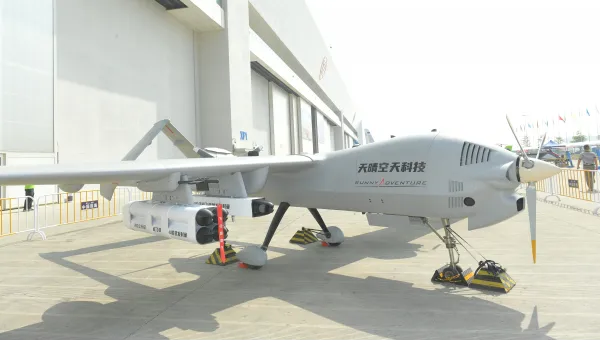
As ground logistics reaches its bottleneck in speed competition, a logistics revolution originating from the sky is quietly unfolding. On December 6, 2025, the SUNNY-T2000, a 2-ton large-scale quasi-trunk general cargo delivery drone independently developed by Zhuhai Sunny Aerospace Technology Co., Ltd. (“SunnySky Technology”), officially rolled off the production line, marking that low-altitude logistics is moving from conceptual exploration to commercial reality. As a key strategic deployment of SunnySky Technology in the Yangtze River Delta, Nanjing Sunny has become the “intelligent brain” and “flight nerve” driving the company’s low-altitude strategy through in-depth breakthroughs in flight control and avionics systems.
Unlocking the Value of Runways, Empowering Trunk Logistics to Soar
One year ago, SunnySky Technology set its sights on low-altitude logistics.
After in-depth exchanges with major freight companies and airlines, He Jun, founder and chairman of SunnySky Technology, found that demand for time-sensitive transportation in the e-commerce and express delivery industries was booming. However, air cargo capacity still heavily relies on “passenger-to-freight” conversion — refitting retired civil aircraft into cargo planes. As most active civil aircraft are still in their prime, newly added cargo capacity lags far behind the rapid growth of the express industry, leading to a severe shortage of cargo aircraft.
Data shows that only about 2% of China’s cargo is currently transported by air, a figure far lower than that of developed Western countries. This huge market gap indicates vast growth potential. “Building one kilometer of highway only lets you travel a short distance, but one kilometer of runway connects you to the world.” This classic aviation proverb reveals the unique value and strategic potential of aviation networks.
“Compared with the high-profile urban air mobility for passengers, unmanned cargo delivery features lower operational risks, clearer technical paths, and lower policy and market acceptance thresholds, making it likely to enter large-scale commercialization at an earlier stage,” He Jun noted.
Specifically, given China’s highly developed high-speed rail and expressway networks, drones hold no obvious advantages in cost or efficiency for feeder transport within 1,000 kilometers. For last-mile scenarios such as drone food delivery, multiple domestic enterprises have already entered the market and established early advantages.
Therefore, SunnySky Technology decided to focus on direct large-scale trunk transportation between cities — a track that fully leverages the long-distance and high-efficiency strengths of air transport, with clear market demand and prominent pain points.
On December 6, 2025, the company’s independently developed SUNNY-T2000 2-ton large quasi-trunk cargo drone was officially launched. With a maximum payload of 2 tons, it supports cargo transportation over 1,000 kilometers and can take off and land on an 800-meter simple runway, flexibly meeting diverse cargo needs including emergency supplies, industrial parts, and agricultural products.
After rollout, the T2000 immediately entered comprehensive onboard and ground testing. Through a series of rigorous assessments, the company fully verified its performance stability and flight safety, laying a solid technical foundation for subsequent airworthiness certification and large-scale market application. According to the plan, the model will conduct its maiden flight within six months.
Notably, the T2000 attracted extensive market attention upon debut. He Jun revealed: “We have already received procurement intentions from multiple overseas clients, including many from countries with highly developed trunk logistics systems. This proves that China’s independently developed large cargo drones possess the technical strength and market recognition to compete globally.”
No “Pull-Over” in the Sky, Achieving “Sunny Speed” through Accumulation
Three years ago, SunnySky Technology began to actively pursue transformation.
Since its establishment, the company has carried a distinct “technology-driven gene”. Its two founders are renowned industry experts. He Jun served as technical director and airworthiness certification director for China’s first electric two-seater light aircraft RX1E, and was the first in China to develop a jet-powered scaled technology demonstrator. His co-founder Gong Zheng is a visiting scholar in virtual flight test technology at the University of Bristol, UK, a lecturer at Nanjing University of Aeronautics and Astronautics, and the first in China to achieve subsonic automatic flight control for tailless flying-wing configurations.
Many state-owned research institutes and large enterprises entrusted the company with specialized technical verification and model development projects. Such demonstrator projects feature high technical barriers and strong professionalism, with very few enterprises qualified to undertake them. At one point, SunnySky Technology concurrently promoted more than 30 projects of various types, completing R&D for over 100 models in total.
“The greatest value of demonstrator projects is that the company systematically built a complete R&D process, accumulated profound technical expertise, and forged a tough technical team. However, these projects end with the conclusion of technical tasks, making it difficult to form sustainable product lines and scale benefits,” He Jun stated frankly.
A shift from “technical service provider” to “independent product manufacturer” became imperative. To this end, the company adopted a dual-track strategy: “either large aircraft or large volume” — focusing on high-value-added large high-end drones with high technical barriers on one hand, and targeting scalable universal products with broad application scenarios on the other.
As is well known, the aviation industry has extremely low fault tolerance: “There is only 0 or 100 points, no 99.” Amid the surging low-altitude economy and fleeting market opportunities, ensuring absolute reliability while responding quickly to the market became a critical challenge. Established in 2020, Nanjing Sunny assumed the role of core technical support.
The core technology of drones lies in the flight control system. Unlike autonomous vehicles operating on 2D road networks, drones must achieve autonomous control in 3D space, requiring precise management of horizontal displacement and real-time coordination of altitude changes — with no option to “pull over” in the air.
Leveraging abundant university resources and talent advantages in Nanjing, Nanjing Sunny undertakes the full development of flight control subsystems, including aerodynamic performance optimization, stability and control analysis, control law design, flight control software development, and avionics integration. “Nanjing Sunny previously tackled many cutting-edge and high-difficulty applications, making it highly proficient in developing low-altitude logistics drones,” He Jun explained.
Through continuous breakthroughs in hardware reliability design, complex environmental control algorithms, and system adaptability, Nanjing Sunny has achieved highly intelligent and “foolproof” operation of flight control and ground station systems. Operators can complete route planning and mission control with just mouse clicks, no remote controller needed. Built-in multi-layer safety protection mechanisms ensure absolute flight safety while simplifying operations.
With such end-to-end independent technical capabilities, SunnySky Technology has achieved remarkable “Sunny Speed”. For the T2000, the company launched design in August 2025 and completed assembly in December of the same year — taking only four months.
Three Wings Take Flight Simultaneously, Mapping Out Low-Altitude Infrastructure
Today, SunnySky Technology has built a complete product matrix.
The company advances simultaneously in military, foreign trade, and low-altitude economy sectors, with products covering technology demonstrators, reconnaissance-strike integrated drones, attack swarm drones, composite-wing drones, and more. Its technological independence and advancement rank among the top in China, with robust revenue growth in recent years.
He Jun believes that increasing policy support, accelerated technological iteration, and unprecedented capital enthusiasm have opened broad prospects for core low-altitude equipment such as large transport drones. The company is accelerating R&D on 6-ton and 10-ton large unmanned cargo transport aircraft, with new models scheduled for launch in 2026, aiming to build a multi-level, networked unmanned air cargo system.
Looking ahead, he envisions a vibrant application landscape: dedicated cargo drone airports will spring up, with logistics warehouses adjacent to runways. Like modern ports, goods will be loaded directly from warehouses and take off, with intelligent sorting completed swiftly upon arrival. Meanwhile, smart command hubs will be established in regional central cities, enabling precise scheduling and full-domain control of drone fleets over vast airspaces via low-altitude satellite communications and other advanced technologies.
Through this flexible air logistics network, air cargo express routes will connect prefecture-level and county-level cities with central hubs. The capillaries of the logistics system will be fully unlocked, allowing consumers in more regions to enjoy delivery speeds comparable to central cities, greatly unlocking consumption potential in China’s vast lower-tier markets.
Mou Min, General Manager of Investment Department 2 of Nanjing Innovation Investment Group, stated that low-altitude economy is a national strategic emerging industry. The drone sector is in a rapid growth stage, featuring strong certainty, large market capacity, and high technical barriers. SunnySky Technology stands out among its peers, with a founding team composed of top drone experts, profound technical accumulation, and comprehensive R&D and mass production capabilities. To date, it has completed 4 world-first technical verifications and over 20 domestic-first technical verifications.
“We believe that with solid technical strength and a clear development path, SunnySky Technology can grow into a leading drone enterprise with even stronger capabilities,” Mou Min added.
The blueprint for low-altitude infrastructure has been laid out. Every drone trajectory draws a graceful curve of efficiency leap; every new takeoff and landing site serves as a powerful fulcrum for regional development. When the sky truly becomes a manageable and empowering strategic space, the horizon of economic development will be lifted to new heights.
Source: Nanjing Innovation Investment Group
Reviewed by: Xue Yao
Released by: You Yi


