If you have deeper insights or opinions on this article, please contact the author:Luo Jian, Industrial Research Center, Nanjing Innovation Investment Groupluoj@njicg.com
The new-generation artificial intelligence and robotics industries are key development tracks in Nanjing, with embodied intelligence as their critical intersection. More than 70 years ago, humans began exploring artificial intelligence, progressing through rule-based systems, expert systems, statistical machine learning, deep learning, and other stages. This evolution shifted from “manually defined rules” to “data-driven learning” and then to “deep learning.” Despite two major downturns, enthusiasm for AI research has never faded. The emergence of the Transformer architecture in 2017 launched a new boom in AI centered on large models, offering the world its first glimpse of human-like AGI.
Today, the global large model-driven AI industry is flourishing, with widespread applications in software development, pharmaceutical R&D, medical imaging, financial investment, autonomous driving, education and training, content creation, office automation, emotional companionship, national defense, and military industries.
However, as a vital integration of AI and hardware, embodied intelligence has developed relatively slowly. The core reason is that it requires translating large model capabilities into motion control, achieving deep integration with multi-dimensional real-world scenarios and physical laws, while solving the challenge of predicting and responding to real-world uncertainties.
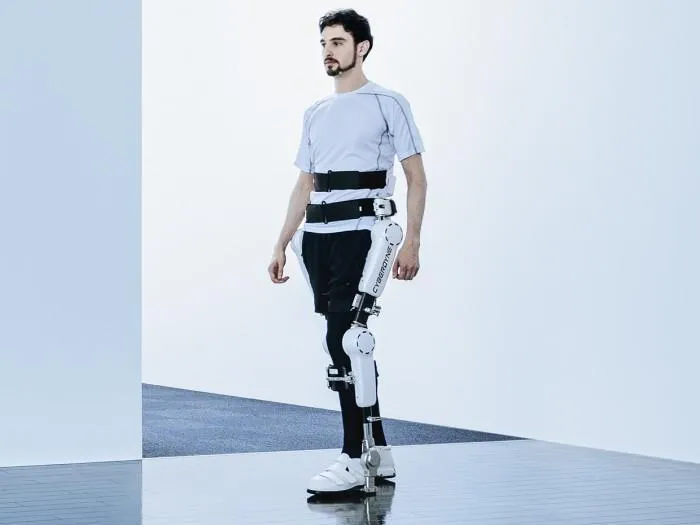
Figure 1: Cyberdyne’s HAL exoskeleton approved by the U.S. FDA
Humanity’s ultimate vision for AI is to create human-like robots—a goal that cannot be achieved overnight. Along this journey, humanoid robots for performance, entertainment, and guidance; industrial robots for short-cycle tasks; special-purpose robots for aerospace, marine, and land applications; and various consumer robots have gradually achieved commercialization and industrial scaling.
This article explores one particularly promising blue-ocean segment: consumer-grade exoskeletons.Supported by lightweight design and artificial intelligence, consumer-grade exoskeletons have found clear priority applications:enhancing outdoor sports performance and assisting mobility for the elderly.The large global outdoor user base and intensifying aging trend create undeniable market demand.The success stories of GoPro, DJI, and Insta360 have already proven that iconic outdoor consumer products can reshape user needs and open entirely new large-scale markets.
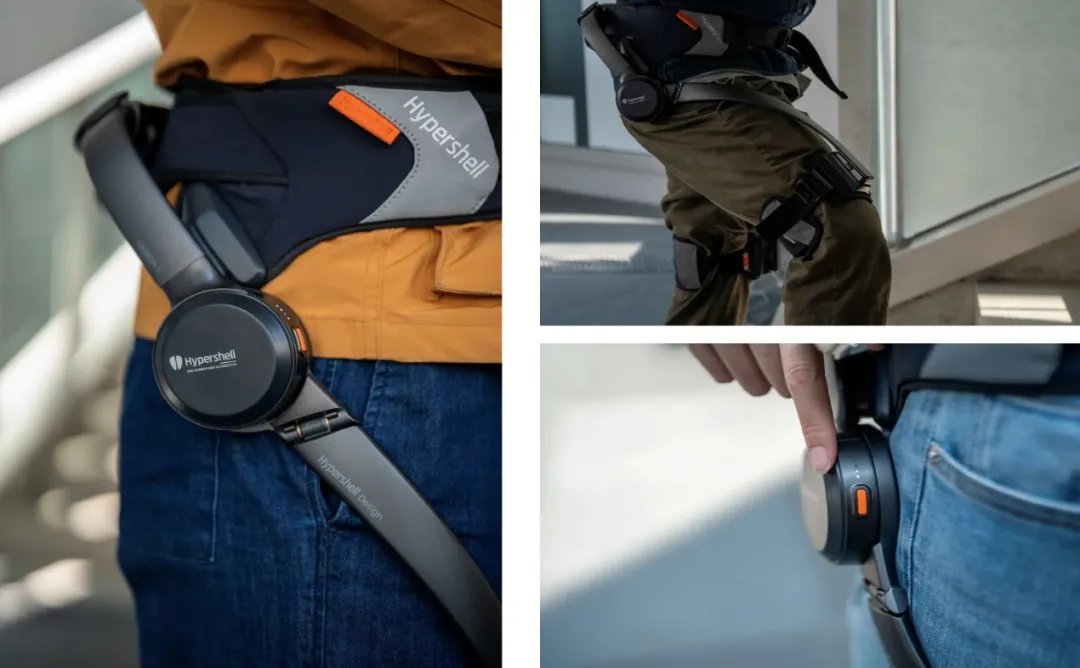
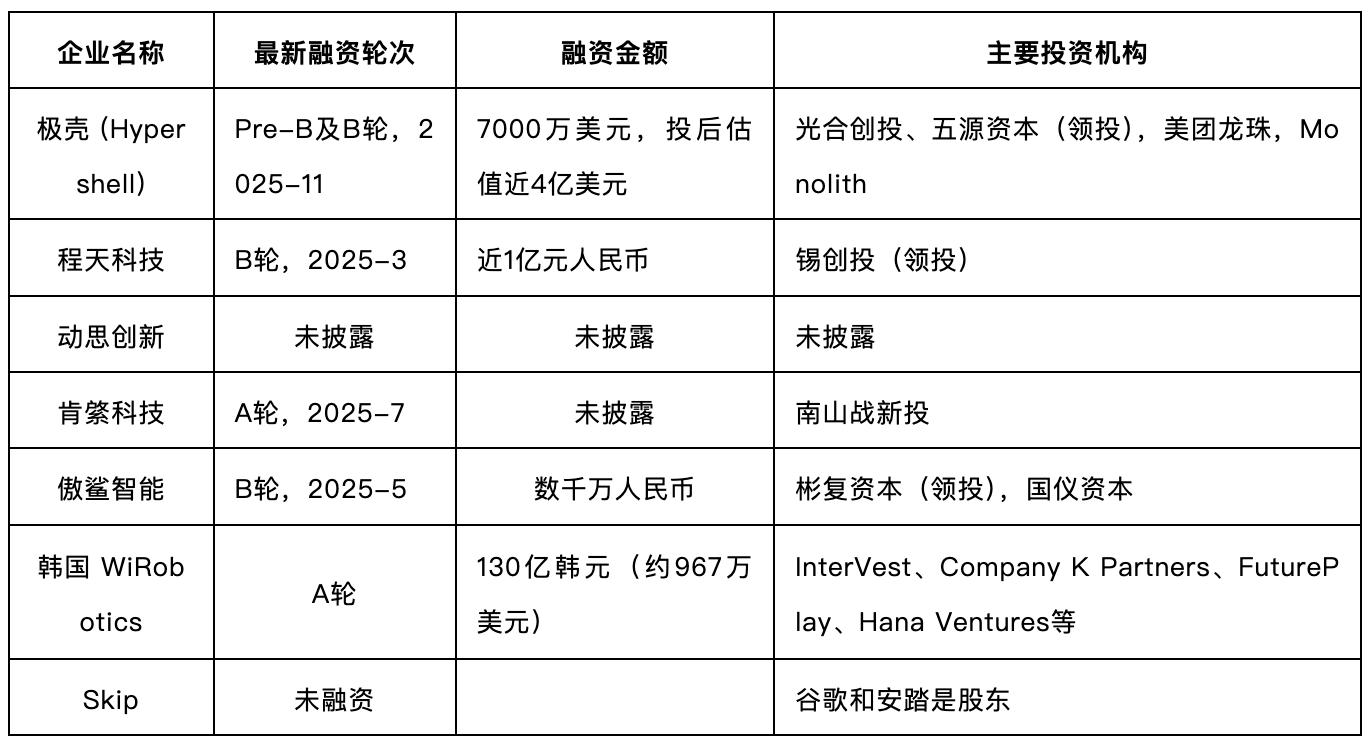
Figure 2: Hypershell raised $70 million in funding with a valuation of nearly $400 million
Hypershell has already taken the lead globally with tens of thousands of units sold and has initially established an overseas outdoor sports brand image. In terms of product strength, branding, channels, and AI-driven iteration based on user habits, Hypershell is currently the most noteworthy company in consumer-grade exoskeletons.
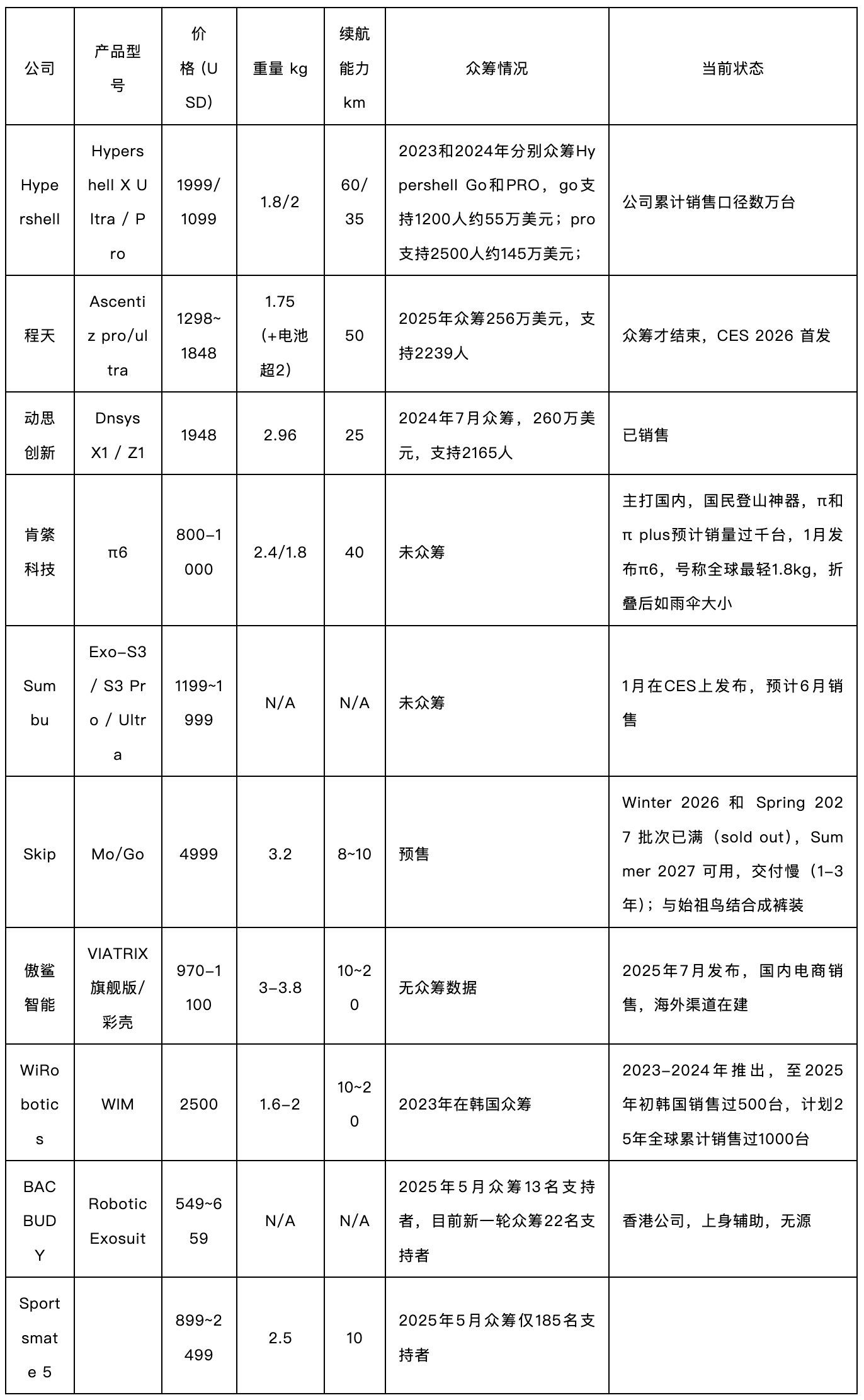
Meanwhile, the successful crowdfunding of Ascentiz series by Chengtian Technology and the launch of π6 by Kenqing Technology in January show comparable product specifications and are worth close monitoring.
Industry Definition and Classification
01 What Are Consumer-Grade Exoskeletons?
An exoskeleton robot is an intelligent mechanical device worn externally on the human body. It senses the user’s motion intent through sensors, delivers assistive torque via drive systems (such as motors), and achieves human-machine coordinated movement through control algorithms—thereby enhancing, assisting, or restoring human mobility.
Exoskeletons fall into three categories based on users and scenarios:
Medical & Rehabilitation: For patients with paralysis, stroke, etc., emphasizing safety and clinical compliance.
Industrial Power-Assist: For heavy labor in logistics, manufacturing, etc., focusing on durability and efficiency.
Consumer-Grade: For healthy people or those with mild mobility limitations, prioritizing lightweight design, comfort, and daily usability.
Consumer-grade exoskeletons target ordinary end-users and can be used daily without professional medical guidance. Their core purpose is not medical treatment, but to improve physical performance (e.g., mountaineering, hiking, cycling) for healthy users or reduce mobility limitations caused by aging, supporting active aging.
Unlike traditional exoskeletons weighing dozens of kilograms and costing tens of thousands of U.S. dollars, consumer-grade models typically weigh 2–5 kg, are priced at ¥6,000–15,000 RMB, and reach mass users via e-commerce, scenic area rental, elderly community centers, and other channels.
02 Classification of Consumer-Grade Exoskeletons
Despite diverse forms, consumer-grade exoskeletons can be systematically classified along three key dimensions:
By Worn Body Part
Hip Exoskeletons: Focus on hip flexion and extension to assist stepping and forward propulsion. Suitable for flat walking, daily assistance, and mild rehabilitation; relatively lightweight.
Knee Exoskeletons: Provide knee support and flexion, reducing joint pressure. Widely used in hiking, mountaineering, and squatting to protect knees and minimize wear.
Hip-Knee Integrated Exoskeletons: Combine coordinated assistance at hip and knee joints for full gait support. Ideal for stair climbing, mountaineering, heavy load handling, and other complex scenarios—the mainstream form in consumer markets.
By Actuation Method
Powered Exoskeletons: Equipped with motors, batteries, and control systems to actively deliver assistance (the dominant technical route today).
Passive Exoskeletons: Store and release energy via springs, elastic materials, or mechanical structures without external power (e.g., some mountaineering knee braces). Low cost but limited functions.
Nearly all consumer-grade products today use powered designs to enable AI-driven dynamic assistance.
Development History and Context
Concept Inception and Early Exploration (1890s–1960s)
In 1890, a Russian inventor proposed a passive mechanical exoskeleton using springs and compressed air to aid walking, marking the origin of the exoskeleton concept.In 1917, the U.S.-developed steam-powered Pedomotor represented the first attempt at a powered exoskeleton.In 1967, General Electric’s Hardiman hydraulic exoskeleton featured 30 joints and could carry 680 kg; though bulky, it laid the engineering foundation for powered exoskeletons.
Technical Accumulation and Scenario Expansion (1970s–2000)
In the 1970s, U.S. universities developed computer-controlled and pneumatic exoskeletons to assist paraplegic walking.In the 1980s, the U.S. Lifesuit Exoskeleton achieved practical verification for disabled walking.In the 1990s, Japan began exploring electromyography (EMG) control, pioneering human-machine collaboration.
Technical Breakthroughs and Industrial Initiation (2000–2015)
After 2000, DARPA promoted military exoskeleton development.In 2004, HAL5 reduced weight to 15 kg and enabled preliminary motion prediction.After 2010, advances in servo motors and sensors (IMU, pressure, angle) drove lightweight design and longer battery life, making medical rehabilitation the first large-scale application.
Lightweight & AI Integration Boom (2016–Present)
Material advances brought some consumer exoskeletons below 2 kg.AI algorithms combined with multi-modal sensing enabled real-time adaptive assistance with millisecond-level response, adapting to complex terrain and motion patterns.AI + lightweighting made mass adoption feasible, expanding applications from rehabilitation to industry (load assistance in overseas auto factories), elderly care (daily walking support), and outdoor activities (mountaineering, hiking).Prices fell toward consumer electronics levels, and breakout products began to emerge.
Technical Routes
01 Evolution of Power Systems
Shifting from ordinary brushless motors to ultra-high-torque, high-density servo and reducer modules.This delivers 800–1000W of power at around 2 kg, reducing physical exertion by 40%, relying on advanced reducer integration.
02 Evolution of Sensing Systems
From single IMUs to multi-sensor fusion.Modern consumer exoskeletons integrate IMUs, torque sensors, pressure sensors, motor current feedback, and even visual recognition.Sampling frequency increased from 100Hz to over 1000Hz, capturing tiny movements or center-of-gravity shifts to provide assistance during the user’s pre-step “preparation phase.”
03 Evolution of Algorithm Systems
From early preset modes, manual switching, and fixed assistance curves based on angles, to AI-powered recognition of multiple motion states, seamless mode switching, and automatic learning of user habits—becoming more personalized over time.
04 Evolution of Material Systems
From early aluminum alloys to carbon fiber, then carbon fiber + titanium alloy components, further reducing weight while improving waterproof ratings.
05 Evolution of Interaction Systems
From no APP support to APP-integrated systems, with physical buttons + APP dual control.OTA updates via APP enable new terrain algorithms and usage modes.
06 Evolution of Battery Systems
From spring-based passive systems to lithium batteries, with continuously improved energy density, optimized power output, modular detachability, and fast charging.
Industry and Market Analysis
The consumer-grade exoskeleton market is still emerging, with no precise sales statistics available.According to Grand View Research (GVR):
Global market size reached approximately $420 million in 2025 and is projected to hit $1.89 billion by 2030, with a CAGR of 35.8%.
China’s market reached about 870 million RMB in 2025 and is forecast to reach 4.92 billion RMB by 2030, growing at a CAGR of 41.2%.
To estimate future potential, we benchmark against two product categories:
High-end outdoor gear: Arc'teryx, Salomon, Osprey.
Outdoor electronics: GoPro, DJI drones, Insta360.
Customer Base
Arc'teryx, Salomon, and Osprey each sell 500,000–1.5 million units yearly, with combined average value exceeding $1,200 per user.GoPro has sold over 50 million units; DJI drones over 10 million; DJI and Insta360 cameras each in the millions.Penetration among core outdoor users reaches ~42%, 10%+, and 5–10% respectively.For reference, smartwatch penetration was <1% globally in 2015 but now stands at 25–30% in the U.S. and 7–8% worldwide.
Current consumer exoskeleton sales are estimated at only around 100,000 units, representing penetration of less than 0.1%.The market has enormous room for growth, far from the 500,000–1,000,000 annual unit sales of top outdoor brands.
This analysis excludes the elderly assistance market.In China alone, there are 310 million people aged 60+, including 40 million with mobility difficulties.Globally, over 85 million elderly people face mobility challenges.At just 10% penetration, this translates to 8.5 million units—translating to annual demand of over one million units (similar to electric wheelchairs in China). Global potential is even larger.
Competitive Landscape
Consumer-grade exoskeletons are a new track spawned by AI embodied intelligence. Most players launched products in 2025, and no stable competitive structure has formed.Chinese firm Hypershell leads globally with cumulative sales in the tens of thousands.
Table 1: Selected Released Consumer-Grade Exoskeleton Products
Capital Trends
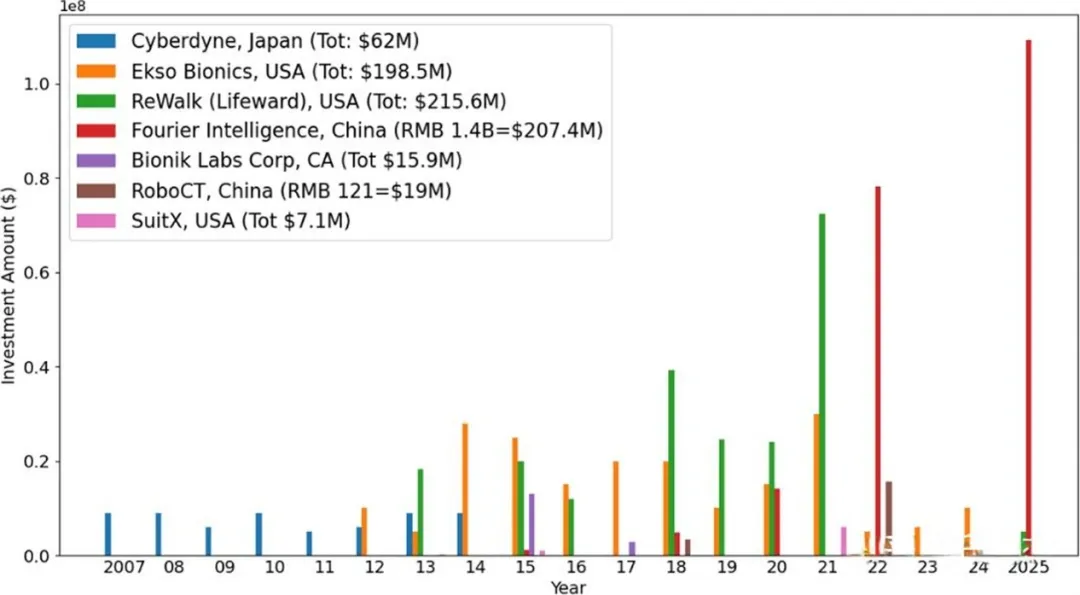
As noted, consumer-grade exoskeletons are a new track under the broader exoskeleton industry (medical, military, industrial, consumer).Global players have long invested in exoskeleton development, and capital attention has risen alongside product evolution.
Figure 3: Investment Analysis of Consumer-Grade Exoskeletons
Table 2: Selected Consumer-Grade Exoskeleton Financing Cases
01 Drivers
The rise of consumer-grade exoskeletons is a profound transformation fueled by human aspiration and cutting-edge technology.
Demand Side: Unlimited Extension of Human Potential
Demand stems from a deep desire to transcend physical limits:
Pursuit of superior experiences: Outdoor enthusiasts seek higher peaks, longer rides, and farther exploration—“reaching limits more easily.” Exoskeletons act as “physical amplifiers.”
Effective protection: Modern users increasingly prioritize joint and muscle health from heavy hiking, commuting, and load-bearing. Exoskeletons serve as proactive “mobile health equipment.”
Work efficiency: For inspectors, rescuers, logistics staff, photographers, and other professionals, exoskeletons enable safer heavy loads and longer operation—a revolution in efficiency and occupational safety.
Supply Side: Convergence of Technological Innovation
Technological breakthroughs have turned demand into reality:
Lightweight materials & actuation: Carbon fiber and titanium alloy frameworks reduce weight from 10 kg to ~2 kg, transforming exoskeletons from industrial equipment to consumer electronics.
Intelligent perception & control: Multi-modal sensor fusion and reinforcement learning enable motion recognition with 10ms response. Exoskeletons evolve from passive tools to “active partners” that anticipate user movement.
Energy & integration: Higher battery density and AI power management extend runtime from 2 hours to 8–10 hours with fast charging, eliminating “energy anxiety.”
These advances turned bulky lab concepts into market-ready blockbuster products.
02 Constraints
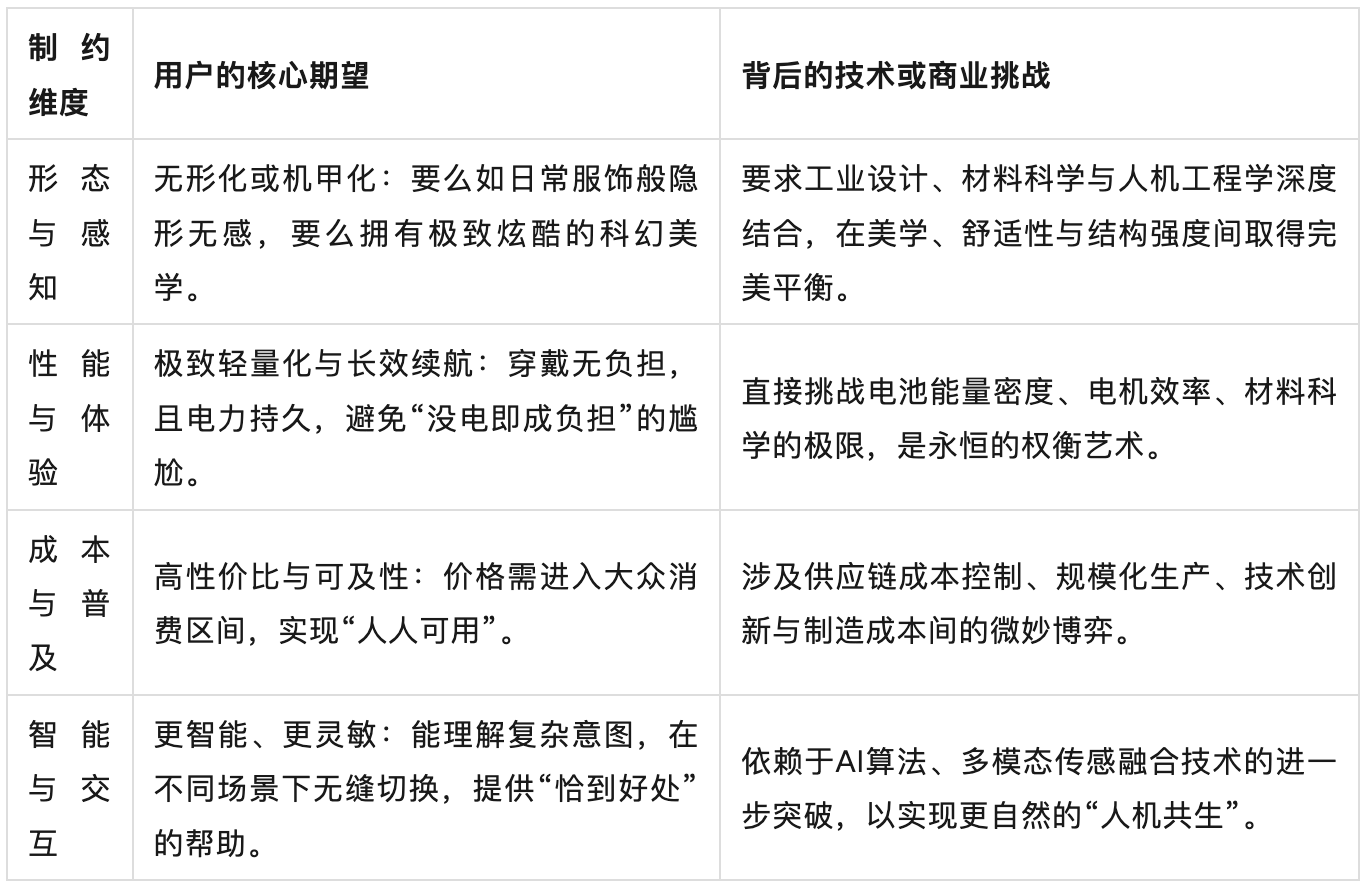
Mainstream adoption faces barriers rooted in rising user expectations, forming a “experience wall” across five dimensions:weight, battery life, appearance, cost, and intelligence.Breakthroughs in any dimension can become a lever to lift penetration and drive mass-market hits.
Table 3: Constraints Facing Consumer-Grade Exoskeleton
Opportunities and Risks
The rapid development of large models is reshaping industries, and embodied intelligence is entering daily life—with consumer-grade AI exoskeletons as a key manifestation. New opportunities come with inherent risks.
01 Opportunities
Historically, exoskeletons focused on medical rehabilitation, military load-bearing, and industrial assistance.Large models and embodied intelligence offer new alternatives for military and industrial use, while medical applications await further maturation of brain-computer interfaces.
Instead, outdoor sports and elderly mobility assistance have emerged as high-potential areas.Lightweight materials and AI algorithms have reduced cost and weight while improving intelligence and responsiveness, igniting new demand.With hundreds of millions of potential users, the sector could produce new iconic mass-market products.
Hypershell remains the standout leader, while Chengtian Technology and Kenqing Technology are strong followers worth monitoring.
02 Risks
Even with weight under 2 kg, long-range battery life, 10ms response, and AI-adaptive gait control, user expectations remain unbounded:lighter weight, invisible design, longer runtime, more natural control, and cellphone-level affordability.A disruptive product combining superior performance and low cost could upend the market.
Additionally, unlike action cameras and panoramic cameras—which benefited from short-video and personal IP trends—consumer exoskeletons currently lack strong social sharing attributes.
03 Breakthrough Points
Major advances in weight, battery life, stealth design, cost, or AI capabilities—especially simultaneous improvements—can significantly boost penetration.If costs fall to consumer-electronics levels (similar to smartphones or cameras) at comparable performance, mass adoption will accelerate.While tracking Hypershell, Chengtian Technology, and Kenqing Technology, investors should also watch for new players achieving leapfrog innovation.
Conclusion
As a core track for embodied intelligence commercialization, consumer-grade exoskeletons leverage AI and lightweight innovation to precisely meet demand in outdoor sports and elderly mobility assistance, offering vast market potential.
Although the industry still faces challenges in form factor, battery life, and cost, ongoing technological iteration, capital support, leadership from top firms, and the first-mover advantage of Chinese players will drive rapid penetration.Consumer-grade exoskeletons are poised to grow from a niche category into a transformative force in the consumer market, opening the next blue ocean for embodied intelligence in daily life.
Source: Luo Jian, Industrial Research Center
Reviewed by: Xue Yao
Released by: You Yi