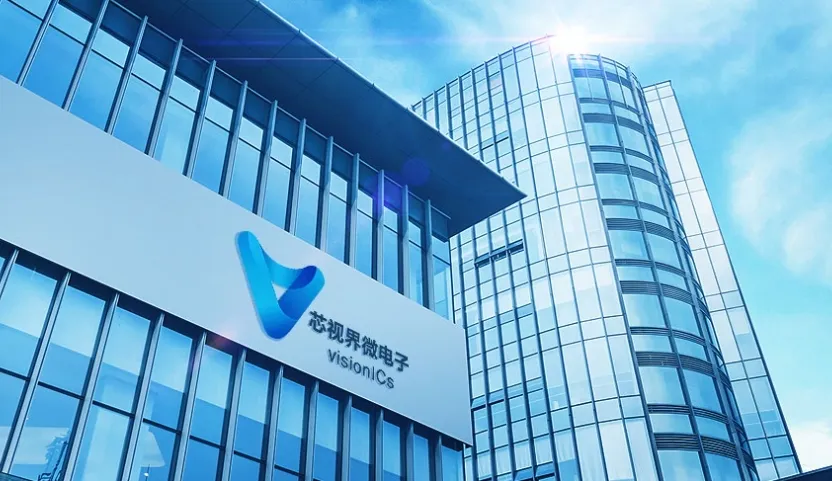
Boosting High-Quality Industrial Development · Venture Capital Record | CoreVision: "A Beam of Light" Illuminates a New World of 3D Sensing
This is a magical beam of light. When the chip emits ultra-short laser pulses that touch the surface of an object, it can capture the reflected photons instantly. By accurately calculating the round-trip flight time of the photons, it quickly parses the distance between the object and itself.
In 2018, Li Cheng, Chairman and Founder of Nanjing CoreVision Microelectronics Technology Co., Ltd. (hereinafter referred to as "CoreVision"), resolutely embarked on his entrepreneurial journey. At that time, SPAD dToF technology was still an undeveloped "no-man's land" in China. However, the team soon realized that although pioneering technology was difficult, transforming the black technology in the laboratory into scalable ranging chips was the real insurmountable barrier.
After seven years of honing, the light finally shines. As the first enterprise in China to realize the large-scale commercialization of SPAD devices and dToF chips, CoreVision has not only expanded its reach in many fields such as smartphones, sweeping robots, industrial automation, and the Internet of Things, but also emerged as a prominent Chinese innovative force in the global wave of 3D sensing development, steadily moving towards a "new vision" where machines have deep perception and intelligence is ubiquitous.
Tempering: From Technology-Driven to Scenario Awareness
In 2018, Li Cheng decided to start a business in Nanjing.
For him, this land carries a double sense of attachment: it bears the deep imprint of his school days at Southeast University and is filled with the familiar atmosphere of his hometown in Jiangsu. Of course, the real factor that prompted Li Cheng to make this decision was the vibrant ecosystem and policy support created by Nanjing Jiangbei New Area, which regards integrated circuits as a key industry. This place has become an ideal soil for emerging enterprises to break ground.
Since its establishment, CoreVision has been in the spotlight—it is one of the few companies in the world focusing on single-photon dToF (direct Time of Flight) 3D imaging technology.
What is dToF technology? Its working process is like a highly precise "light-speed stopwatch": a laser emits extremely short light pulses, which travel at the speed of light and reflect back after touching an object. The SPAD (Single-Photon Avalanche Diode) detector at the receiving end can capture reflected photons as faint as sparks, accurately record the flight time of the light, and then calculate the distance to the object based on the speed of light. With its millimeter-level ranging accuracy, excellent anti-interference performance, and low power consumption, once integrated into a chip, dToF technology can endow intelligent devices with core capabilities such as real-time ranging, 3D modeling, and even scenario recognition.
"We are not doing domestic substitution, but taking a path of technology first and business first," Li Cheng said. Although he has 18 years of experience in optical sensing R&D and management, and the average working experience of the team members exceeds 15 years, promoting the laboratory technology to the market and realizing large-scale application is no easy task.
It is reported that the mass production of dToF chips faces difficulties in every link:
SPAD devices are not ordinary transistors, but "photon-level insight tools" that require special customization based on standard chip manufacturing processes.
The packaging of dToF chips is not a simple plastic case, but a precision system integrating micro-optical lenses and filters. It must simultaneously achieve efficient collection of external light energy and strong suppression of background light interference, and its difficulty, precision, and yield control are far beyond those of ordinary chips.
dToF chips require optical performance and function testing under specific lighting conditions, with expensive equipment and complex processes. These factors directly determine the final mass production cost and commercial feasibility.
At the same time, dToF technology is firmly controlled by a few international giants. Start-ups like CoreVision not only need to break through technical barriers but also build their own supply chains, customer trust, and mass production capabilities, which is undoubtedly an arduous journey.
"We must find a gap to let the light in!" The entrepreneurial team set their sights on sweeping robots. At that time, the sweeping robot industry had just emerged in China, and products were often controversial due to insufficient intelligence and low cleaning efficiency. dToF technology was expected to endow robots with precise navigation and modeling capabilities, but reality soon dealt a heavy blow to the team.
Li Cheng recalled that in the early days of entrepreneurship, CoreVision's operation model was driven by underlying innovation rather than commercial implementation and customer orientation. "The company once reached a 10-million-level intentional order with a leading sweeping robot enterprise, but when the product entered real-scenario testing, problems broke out intensively. Under specific distances and complex home environments, the ranging accuracy and signal stability could not meet the customer's requirements," he said.
This uncompleted first order became a key turning point in the company's development path. The team quickly adjusted the R&D direction, deeply understood the scenarios, and restructured the product design. Only one year later, the team launched a new generation of dToF chips that fully met the customers' strict standards, and in 2021, it took the lead in realizing the large-scale commercialization of SPAD devices and dToF chips in the domestic market, completing the leap from technical idealism to commercial realism.
Rise: From "Behind-the-Scenes Hero" to "Hidden Champion"
Today, as artificial intelligence and the physical world accelerate their integration, enabling machines to perceive and understand 3D environments as accurately as humans has become the key to promoting industrial upgrading.
In September, a relevant report released by the International Data Corporation (IDC) showed that in the first half of 2025, among the top five global brands in the market, Chinese manufacturers strongly occupied four seats, demonstrating the leading position of "Made in China" in the cleaning robot equipment market.
Consumers can intuitively feel that today's sweeping robots are becoming more and more "intelligent": they can not only clean along walls accurately without dead ends but also identify small obstacles on the ground and independently judge whether to move forward or backward at the entrance of stairs and in front of steps. Behind these intelligent experience upgrades, the support of SPAD dToF sensor technology is indispensable.
"The home environment seems simple, but it is actually complex and changeable. Furniture varies in height, floor materials have different reflectivity, and the spaces under beds and in the corners of sofas are narrow... To achieve truly efficient and comprehensive cleaning, extremely high requirements are put forward for the sensing accuracy and environmental adaptability of sensors," Li Cheng said.
As the first enterprise in the world to introduce SPAD dToF technology into the sweeping robot industry, CoreVision has replaced the traditional triangulation ranging method with a new underlying sensing solution, enabling sweeping robots to have core capabilities such as accurate whole-house mapping, intelligent obstacle avoidance, and wall-following cleaning.
Li Cheng introduced, "Take the common home shower door as an example. There is often a water barrier about 2 cm high at the door. A few years ago, sweeping robots were easily stuck here; now, products equipped with our chips can easily cross such obstacles."
As local sweeping robot brands have led the domestic market and gradually moved towards the global high-end market, CoreVision has also completed its transformation from a "behind-the-scenes hero" to a "hidden champion". At present, most well-known domestic sweeping robot brands have cooperated with CoreVision, and the market share of its light detection chips in this field exceeds 80%.
While achieving great success in the sweeping robot field, CoreVision has quickly expanded its technical advantages to the broader consumer electronics market. Its products are widely used in smartphones, industrial automation, the Internet of Things, personal computers, and other fields. The cumulative shipment of SPAD dToF chips has exceeded 100 million.
With the expansion of product lines and the connection of application scenarios, CoreVision's development flywheel has begun to accelerate. In recent years, the company's revenue has doubled consecutively, showing a strong development momentum. "The company had almost no revenue in the first three years after its establishment. It is the long-term adherence to the technical route and the continuous deep cultivation of market demand that have allowed us to pass through the trough and usher in the current growth surge," Li Cheng said with emotion.
Voyage: From Technological Breakthrough to Ecological Leadership
In September, CoreVision announced the completion of a C+ round of strategic financing of hundreds of millions of yuan. The funds will be mainly used for the R&D and iteration of core technologies, market expansion, and the mass production promotion of automotive-grade products. Among them, Nanjing Venture Capital Group has made a strategic investment of tens of millions of yuan in CoreVision using multiple funds under its management, including Nanjing Advanced Manufacturing Master Fund, Bank of Communications AIC Fund, and Talent Fund.
Mou Min, General Manager of the Second Investment Department of Nanjing Venture Capital Group, said: "CoreVision's core team has profound technical accumulation and rich industrial experience in the field of SPAD dToF technology, and its highly integrated dToF chip design capability has significant scarcity in the industry. In 2025, the company's product line is expanding from basic optical sensing applications to multiple fields of machine 3D vision, and we are very optimistic about its application potential in emerging fields such as humanoid robots and vehicle-mounted lidar."
Facing the support of a new round of capital, Li Cheng also said that the path of hard technology breakthrough is full of uncertainties, and it especially requires the long-term companionship of patient capital. "In Nanjing Venture Capital Group, we have seen the same strategic focus and keen judgment on cutting-edge technologies, which is an important reason for us to choose to move towards the future with it."
According to calculations by Gartner and Hexa Capital, the global market size of light detection chips will reach 6.67 billion US dollars in 2025. In 2027, the SPAD market size will climb to 2.139 billion US dollars, accounting for 26.46% of the entire optical chip market, with a compound annual growth rate of more than 200%. In 2030, the total global sales of SPAD chips are expected to exceed 30 billion yuan, showing strong growth potential.
Facing this broad prospect, guided by the strategic thinking of "looking at ten years, planning for three years, and acting for one year", CoreVision has formulated a clear development path. In the consumer electronics field, the company will continue to deepen its layout, and its new generation of light-sensing chips is planned to be put into mass commercial use in 2025. This chip integrates automatic screen brightness adjustment and proximity sensing functions, which can automatically trigger operations such as screen off, screen on, or pause/play music when users answer calls or interact with Bluetooth devices, greatly improving the interactive intelligence and usability of the device.
At the same time, the company has completed forward-looking technical reserves in fields such as AR/VR, vehicle-mounted lidar, intelligent security, and humanoid robots, accumulating strength to meet the new round of growth wave.
What makes Li Cheng even more gratified is that CoreVision has not only taken the lead in realizing the engineering and industrialization of SPAD dToF technology in China but also personally participated in and promoted the entire industrial chain from its infancy to maturity. With the continuous improvement of all links in the industrial chain and the continuous expansion of application scenarios, more and more local innovative forces are pouring into this track. "We look forward to working with more peers to explore and grow together, and empower thousands of industries with 3D sensing technology," Li Cheng said.
From enabling humans to "see" to enabling machines to "see", this beam of light from the laboratory has not only illuminated an upgrading path from technological breakthrough to industrial collaboration but also merged into the vast galaxy of China's independent innovation in high-end chips like a spark, shining brightly and illuminating the future.
Source: Venture Capital Group
Review: Xue Yao
Release: You Yi